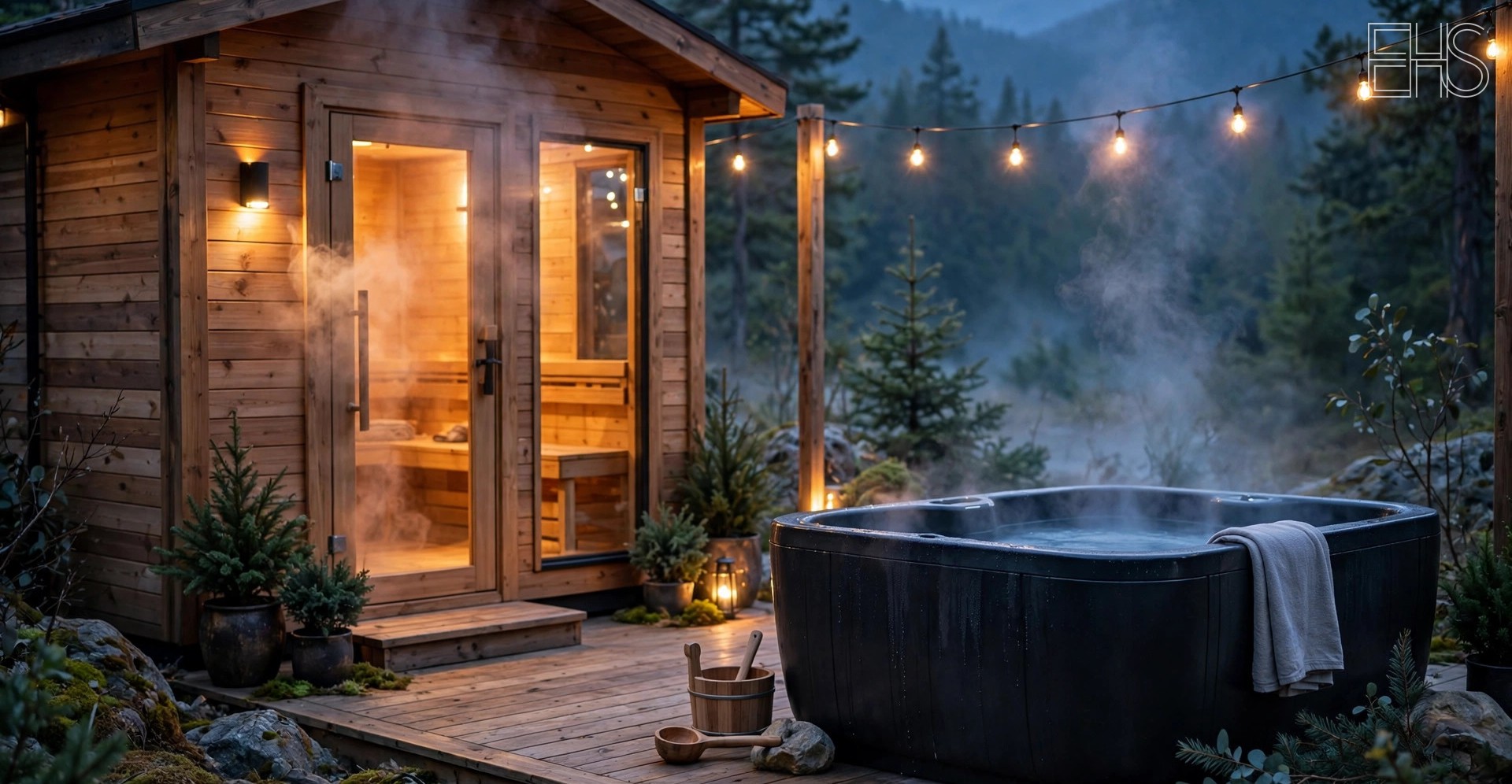
Sauna, then plunge. Heat, then cold, then heat again. Contrast therapy, the deliberate cycling between hot and cold exposure, is one of the oldest practices in the wellness world and one of the trendiest, with Nordic spa circuits and backyard sauna-plus-plunge setups multiplying every year.
The individual halves of the practice have their own evidence bases, covered in our reviews of cold immersion and sauna. But the combination is studied far less than either component alone, and the marketing tends to present the pairing as more than the sum of its parts. This review examines what the cycling itself actually adds.
How to Read This Literature
Contrast therapy research is a thin field with specific problems:
- Few dedicated trials. Most of what is cited as contrast therapy evidence is actually evidence about heat or cold, with the combination assumed to inherit both. Direct trials of hot-cold cycling protocols are scarce.
- No standard protocol. Studied versions range from alternating hot and cold water immersion in sports labs to sauna-then-plunge sequences at spas. Session counts, temperatures, and timing vary so widely that "contrast therapy" names a family of practices, not one intervention.
- The order question is unanswered. Whether heat-then-cold differs meaningfully from cold-then-heat, and how many cycles matter, has barely been studied directly.
- Athlete populations again. The dedicated trials that exist mostly study athletes recovering from team-sport or endurance efforts, not general wellness users.
- Subjective outcomes dominate. Perceived recovery, soreness ratings, and self-reported well-being are the common measures; objective performance and health outcomes are rare.
The calibration: the components have real evidence; the specific benefits of cycling between them are mostly untested.
What the Components Bring
To assess the combination honestly, start with what each half contributes on its own:
Heat (sauna, hot immersion) has the stronger evidence base of the two. Regular sauna use is associated in observational studies with cardiovascular and relaxation benefits, and experimental work shows acute improvements in circulation and self-reported well-being. Heat before cold also pre-warms the body, which changes the subjective experience of the plunge that follows.
Cold (plunge, cold immersion) has solid evidence for reducing perceived muscle soreness after intense exercise and producing a short-term alertness lift via norepinephrine release. The effects are real but narrowly bounded, as our evidence review details.
The combination, in principle, delivers both sets of effects in sequence: the circulatory and relaxation qualities of heat, then the alertness and soreness relief of cold. Whether the alternation adds anything beyond experiencing each separately is the open question.
Perceived Recovery: The Main Finding
The dedicated contrast-therapy trials that exist, mostly comparing contrast water therapy against passive recovery or cold-only immersion in athletes, generally find that athletes report feeling better recovered after contrast protocols. Soreness ratings and perceived recovery scores tend to favor the contrast groups.
But two qualifications matter. First, the advantage over cold-water immersion alone is small and inconsistent across trials; several studies found no meaningful difference between contrast and cold-only protocols. Second, objective measures of recovery, like strength or sprint performance restoration, show even smaller differences. The honest reading is that contrast therapy feels good and may aid perceived recovery, without clear evidence that the cycling outperforms cold alone.
Circulation and the "Vascular Workout": Plausible, Unproven
The popular explanation for contrast therapy is that alternating heat and cold "exercises" the blood vessels, training vascular responsiveness through repeated dilation and constriction. It is an appealing story, and the acute vascular responses to heat and cold are real and measurable.
What is missing is evidence that these acute responses translate into lasting vascular adaptation from contrast protocols specifically. No trial has shown that regular hot-cold cycling improves vascular function beyond what regular heat or regular cold exposure achieves. The vascular-workout narrative is mechanism-based speculation, not a measured outcome.
Practical takeaway: the blood vessels certainly respond during a session; whether repeated sessions train them better than heat alone is unknown.
Mood and the Ritual Effect: Real but Unattributable
Contrast therapy devotees describe a distinctive post-session state: calm from the heat, electric from the cold, deeply relaxed overall. This is among the most consistently reported subjective effects in the space, and it is entirely plausible given what each component does to alertness and relaxation systems.
The honest attribution problem: this experience could come from the heat alone, the cold alone, the contrast between them, or simply from spending unhurried time in a beautiful setting doing something deliberate. The ritual, the setting, and the contrast are confounded in every real-world session, and no trial has separated them.
Sleep: Borrowed Evidence
Contrast therapy is sometimes recommended for sleep, but the evidence is borrowed: heat bathing has modest sleep evidence (the post-sauna drop in core temperature resembles the body's natural pre-sleep cooling), while cold immersion's sleep evidence is sparse. No trial has tested whether a hot-cold sequence improves sleep more than heat alone. If sleep is the goal, the heat component is doing the plausible work.
Inflammation and Immune Markers: No Specific Evidence
Marketing sometimes claims contrast therapy "flushes" metabolic waste or resets the immune system through the hot-cold cycle. There is no specific evidence for these claims. The components' effects on inflammatory markers are modest and mixed on their own; the cycling adds no demonstrated benefit on top.
Longevity: Unknown
No study has measured lifespan or healthspan outcomes from contrast therapy protocols. The sauna literature contains interesting observational associations with longevity-related outcomes, but those concern habitual heat bathing, not hot-cold cycling, and observational data cannot establish causation.
The Claims to Retire
| Claim | Verdict |
|---|---|
| "Trains your blood vessels" | Acute responses are real; lasting adaptation from cycling is unproven. |
| "Flushes toxins / clears metabolic waste" | No meaningful evidence; the language is marketing. |
| "More effective than sauna or plunge alone" | Dedicated trials show small, inconsistent advantages, if any. |
| "Resets the immune system" | No specific evidence for the cycling protocol. |
| "The contrast itself is the therapy" | Untested; benefits may come from the components or the ritual. |
| "Extends lifespan" | Zero evidence for hot-cold cycling specifically. |
Protocols: What Is Actually Practiced
Because no evidence-based standard protocol exists, what follows describes common practice, not prescription. Typical spa circuits run 10 to 20 minutes of heat followed by 1 to 3 minutes of cold, repeated two to three times, often ending on cold. Athletic contrast water therapy in the literature more often used alternating hot and cold water immersion in roughly 1-minute to 7-minute alternations. Our contrast therapy protocols guide walks through the common approaches in detail.
One practical note from the component literature: ending on cold leaves most people alert and energized, which suits mornings; ending on heat leaves people relaxed, which suits evenings. This is experiential wisdom consistent with the physiology, not a trial finding.
Safety: Not for Everyone
Heat plus cold is a stronger cardiovascular stressor than either alone, and it is not for everyone. People with cardiovascular conditions, uncontrolled blood pressure, or pregnancy should not do hot-cold cycling without personal professional guidance. Standard cautions apply to each half: hydrate, do not use heat or cold to the point of dizziness or numbness, and never plunge alone in remote settings.
Cost and Setup
Contrast therapy at day spas and bathhouses is typically listed from around $50 to $150 per visit in major markets, with memberships reducing the per-visit figure. A home setup pairs a sauna (home units typically listed from around $3,000 to $10,000 depending on type and size) with a cold plunge (from a few hundred dollars for an ice-filled tub to several thousand for a chilled unit). Our cold plunge versus sauna comparison covers the equipment decisions on the cold side. As with all pricing here, verify current rates before booking or buying.
What Would Change Our Minds
Direct trials comparing contrast protocols against heat-only and cold-only arms, in general populations, measuring both subjective and objective outcomes over months. Dose-response work on cycle counts and temperature differentials. Until that literature exists, contrast therapy sits in the category of "enjoyable practice with plausible components and unproven synergy."
The Honest Bottom Line
Contrast therapy is a wonderful ritual built from two components with genuine, bounded evidence, wrapped in a synergy story the research has not confirmed. The cycling may add something beyond the parts; it may simply be a pleasant way to experience both. Either way, the honest purchase is the experience itself: the heat, the cold, the deliberate alternation, the unhurried hour. Buy it for that, not for vascular training or immune resets the trials have not shown.
Frequently Asked Questions
Should I start with heat or cold?
Most traditional practice and most studied protocols start with heat and end with cold, typically with two to three cycles. There is no direct trial evidence that the order changes outcomes, so convention and personal preference reasonably govern.
How many hot-cold cycles are ideal?
Unknown. Common practice uses two to three cycles; the athletic literature used various alternation schemes. No dose-response research establishes an optimal number, and more cycles have not been shown to produce proportionally larger effects.
Is contrast therapy better than just using a sauna?
For the outcomes studied, mostly perceived recovery in athletes, contrast protocols show small and inconsistent advantages over single-modality approaches. For relaxation and the general experience, it is a matter of preference rather than evidence.
Can I do contrast therapy with a hot shower and cold shower?
Shower-based contrast is the most accessible version and is widely practiced. The temperature differentials are smaller than sauna-to-plunge, so the physiological stimulus is milder, but the basic pattern is the same and the safety profile is gentler.
Does ending on cold versus heat matter?
Experientially, ending on cold tends to leave people alert while ending on heat leaves people relaxed, consistent with what each exposure does alone. No trial has tested whether the ending temperature changes measured outcomes.
How often can I do contrast therapy?
There is no evidence-based frequency guideline. Regular sauna users in observational studies bathed several times per week; contrast-specific frequency research does not exist. Session comfort and recovery between sessions are the practical guides.
This guide is for general information about contrast therapy and is not medical advice. Consult a qualified professional before making health decisions.