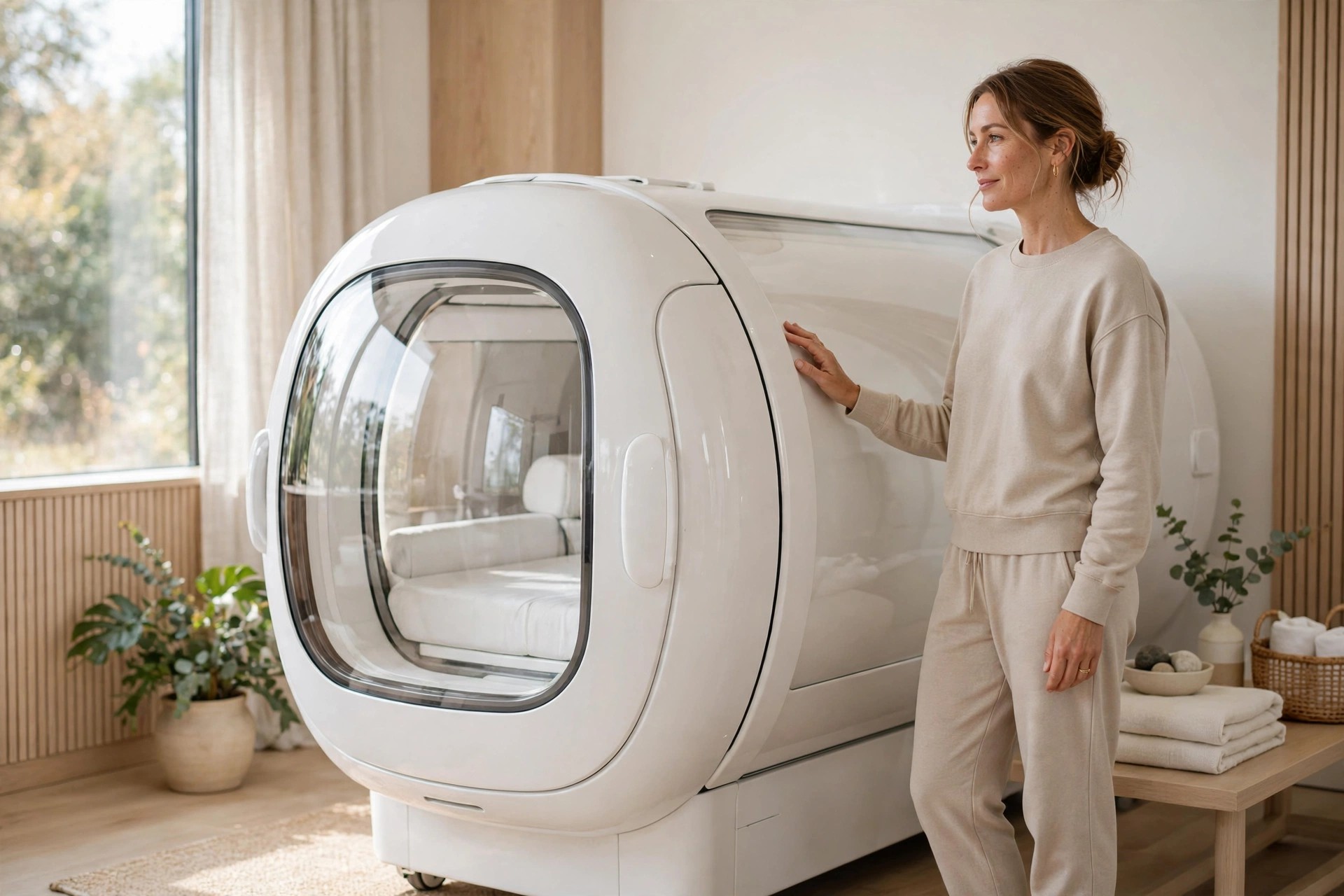
Hyperbaric oxygen therapy — breathing oxygen in a pressurized chamber — has moved from hospitals and dive medicine into the wellness mainstream. Professional athletes have them. Longevity clinics offer sessions. And a growing number of companies now sell chambers designed for home use, with prices ranging from a few thousand dollars to well over $100,000.
This is the most expensive and most medically adjacent category we cover. It deserves the most careful explanation. Here's what these chambers are, what the two types actually differ in, what they cost, and what you need to know before even considering a purchase.
What a Hyperbaric Chamber Does
The concept is straightforward: inside a sealed chamber, air pressure is raised above normal atmospheric pressure, and the occupant breathes oxygen-enriched air. Higher pressure allows the lungs to take in more oxygen than at normal pressure — that's the entire mechanism.
In hospitals, hard-shell chambers operating at high pressures are used for specific, well-established medical purposes: treating decompression sickness, certain serious infections, carbon monoxide poisoning, and specific wound-healing situations, among a defined list of approved uses. This is real medicine with real evidence, administered by trained staff.
Home chambers are a different category. They operate at lower pressures, are marketed for general wellness, and sit in a very different evidence landscape. Understanding that gap is the single most important thing in this guide.
Soft Chambers vs Hard Chambers
Soft (mild) chambers
Soft chambers are flexible — think of a long, reinforced nylon or TPU tube you zip yourself into, roughly the size of a sleeping bag for one person. A small compressor pressurizes the chamber to around 1.3 ATA (atmospheres absolute), compared to 1.0 ATA at sea level. Oxygen is typically delivered through a mask or nasal cannula inside the chamber.
- Typical price: $5,000–$25,000 for home models
- Pressure: ~1.3 ATA (mild)
- Footprint: Rolls up or folds for storage; needs floor space roughly 7–8 feet long during use
- Operation: Consumer-grade; designed for self-administration after training
Soft chambers are the entire "home hyperbaric" market for practical purposes. They're portable, relatively affordable, and don't require structural installation.
Hard chambers
Hard chambers are rigid steel or acrylic vessels — the kind you picture in a hospital. They operate at higher pressures (typically 1.5–3.0 ATA in clinical settings) and require professional installation, dedicated space, and trained operation.
- Typical price: $50,000–$150,000+
- Pressure: 1.5–3.0 ATA
- Footprint: Permanent installation, room-sized
- Operation: Requires trained staff; not a realistic consumer purchase
For home buyers, hard chambers are essentially out of scope — the cost, installation, and operational requirements put them in clinic territory. When wellness marketing says "home hyperbaric chamber," it means a soft chamber.
The Evidence Question — Read This Carefully
This is where honesty matters most. The evidence for high-pressure clinical hyperbaric therapy for its approved medical uses is strong — that's established medicine.
The evidence for mild-pressure soft chambers used for general wellness — better recovery, sharper cognition, "longevity" effects — is a different story:
- Studies are few, small, and often short-term.
- Many positive findings come from studies funded by chamber manufacturers or wellness clinics, which warrants healthy skepticism.
- The proposed mechanisms are plausible (more oxygen delivery under mild pressure), but plausible isn't proven.
- There is no credible evidence that mild hyperbaric sessions prevent, treat, or cure any disease — and any company claiming otherwise is one to avoid.
Some users report feeling more rested or recovering faster, and those subjective reports are worth noting for what they are: subjective. The placebo effect, the forced rest of lying still for an hour, and the general ritual of a recovery practice all plausibly contribute.
Our position: a soft chamber is an expensive way to lie still and breathe. If the ritual appeals to you and the money is genuinely comfortable, that's a personal choice. But buy it as a luxury recovery ritual, not as a medical intervention — because the evidence supports the former framing and does not support the latter.
Realistic Costs of Ownership
The sticker price is only the beginning.
| Cost | Soft chamber | Notes |
|---|---|---|
| Purchase | $5,000–$25,000 | Higher-pressure soft models cost more |
| Oxygen concentrator | Often included; $1,000–$3,000 if separate | Needed for oxygen-enriched breathing |
| Electricity | Modest | Compressor and concentrator draw |
| Maintenance | $200–$800/year | Zippers, seals, filters, compressor service |
| Replacement parts | Varies | Chambers have finite zipper/seal lifespans |
| Space | A room | Needs ~8 feet of clear floor during use |
Also factor in the time cost: sessions typically run 60–90 minutes, and any routine worth maintaining means several sessions per week. A $15,000 chamber used twice and abandoned is the most expensive outcome.
What to Know Before Buying
1. Talk to your doctor first
This isn't boilerplate. Pressurized environments are genuinely contraindicated for certain conditions — including some lung conditions, ear and sinus issues, and recent surgeries, among others. Anyone with a medical condition, or anyone taking medication, should get explicit clearance before using any hyperbaric chamber. This applies doubly to the higher-pressure end of the soft-chamber range.
2. Understand what "mild" means
At 1.3 ATA, a soft chamber delivers a fraction of the pressure used in clinical settings. That's by design — it's what makes home use feasible. But it also means clinical evidence for high-pressure therapy doesn't transfer to mild chambers. They're different interventions. Don't let marketing blur that line.
3. Try before you buy
Sessions at wellness clinics or longevity centers typically cost $75–$200. Ten sessions costs less than a tenth of a chamber. More importantly, it tells you whether you actually enjoy spending 90 minutes zipped in a tube — many people find the confinement unpleasant, and discovering that after a $15,000 purchase is painful.
4. Check the safety basics
Reputable manufacturers publish pressure ratings, emergency depressurization procedures, and material specifications. Look for chambers with redundant pressure-relief valves, clear emergency-exit instructions operable from inside, and no-flame-risk materials guidance (oxygen-enriched environments and ignition sources don't mix — no phones charging inside, no exceptions). If a seller can't explain their safety engineering clearly, walk away.
5. Consider the alternatives honestly
An hour of quiet rest, good sleep, and sensible training load management deliver most of what people seek from recovery modalities — at zero cost. A chamber doesn't replace any of that. If your sleep is poor and your training is chaotic, fix those first; they're higher-leverage than any device.
Who This Is Actually For
- High-net-worth wellness enthusiasts who've already optimized sleep, training, and nutrition and want to experiment at the margin. The money should be genuinely comfortable — not stretched.
- Clinic and studio owners adding a modality for clients, where the chamber is a business asset with revenue attached.
- Curious experimenters who should rent sessions, not buy chambers.
Who Should Skip It
- Anyone stretching financially to afford it. The evidence doesn't justify hardship spending.
- Anyone with contraindicated medical conditions (see your doctor — seriously).
- Anyone claustrophobic. A zipped tube at pressure is not the place to discover this.
- Anyone expecting medical outcomes. The evidence for wellness use is suggestive at best.
Frequently Asked Questions
How does a home hyperbaric chamber differ from a hospital one?
Pressure and purpose. Hospital chambers reach 2–3 times atmospheric pressure and are used for specific approved medical treatments under professional supervision. Home soft chambers reach about 1.3 ATA and are marketed for general wellness. The clinical evidence for the former does not transfer to the latter.
How long is a session, and how often do people go?
Typical soft-chamber sessions run 60–90 minutes, and regular users often aim for 3–5 sessions per week. That's a serious time commitment — roughly the equivalent of adding a part-time hobby. Factor it into the true cost.
Is it safe?
For healthy adults using reputable equipment as directed, mild hyperbaric sessions are generally considered low-risk — but "low-risk" isn't "no-risk." Pressure affects ears and sinuses; oxygen-enriched environments have fire-safety implications; and certain medical conditions are genuine contraindications. Medical clearance first, always.
Can children or older adults use one?
This is a question for a doctor, not a buyer's guide. Age alone isn't the issue — individual health status is. Anyone considering sessions for a child or an older adult with health conditions needs professional medical guidance first.
Do I need a prescription to buy a home chamber?
In most jurisdictions, mild soft-shell chambers are sold as consumer wellness devices without a prescription. Higher-pressure units may face medical-device regulation depending on the country. Check your local regulations — they vary, and sellers don't always volunteer the details.
What's the resale market like?
Thin. Hyperbaric chambers are niche, heavy, and hygiene-sensitive — all of which depress resale value. Assume you'll recover a fraction of the purchase price if you sell. This is a buy-it-to-keep-it purchase, which is another reason to try sessions first.
This article is for informational purposes only and is not medical advice. Consult a qualified professional before making health decisions.