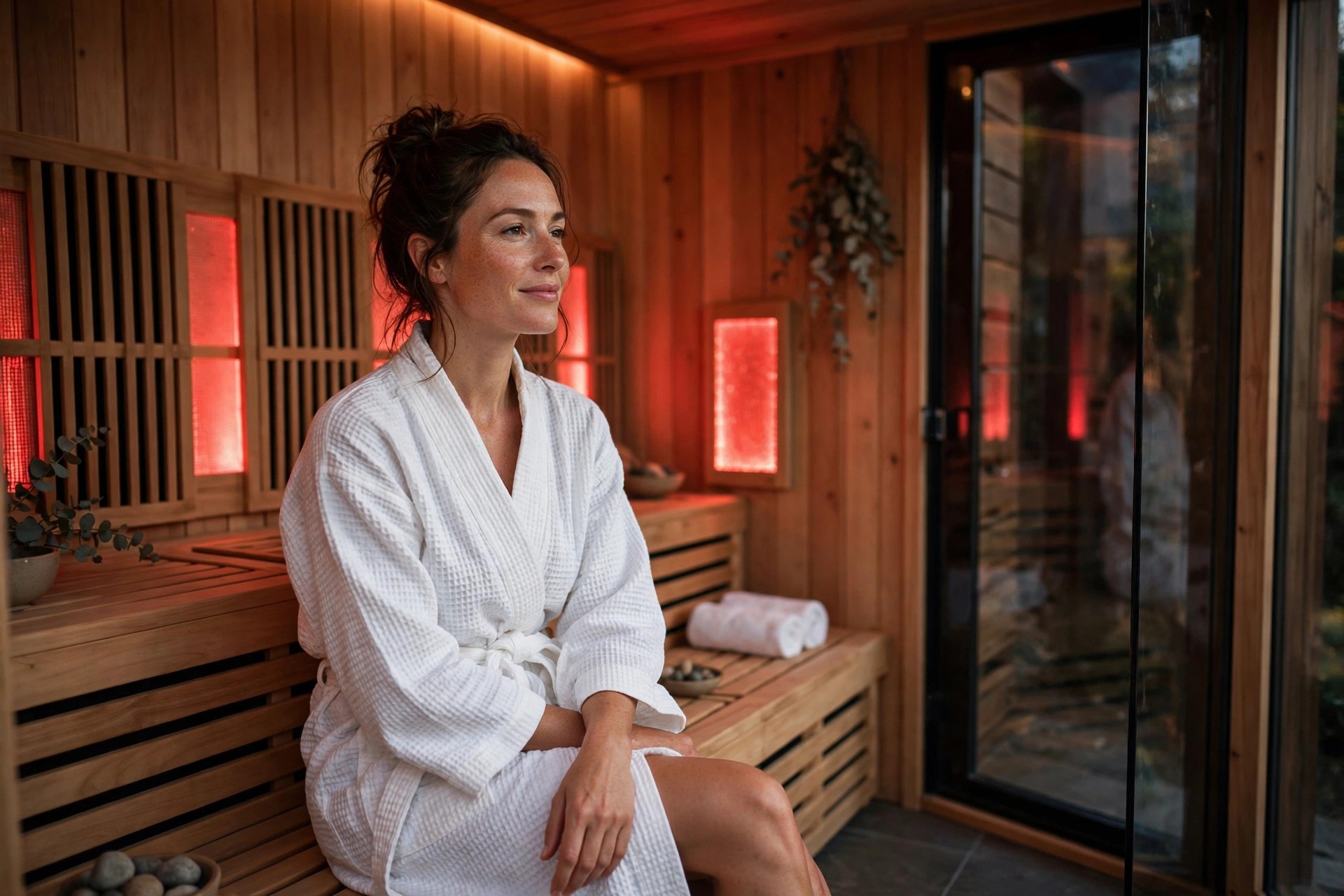
An infrared sauna is the most approachable way to bring serious heat home. No 220V wiring in most cases, no plumbing, no ventilation project — a two-person unit plugs into a standard outlet and fits in a spare corner. But prices span from $1,500 to $7,000+, and the differences between units are real: heater quality, wood, construction, and safety certifications separate the saunas you'll love for a decade from the ones you regret by spring.
Here's what actually matters when you're spending real money.
How Infrared Saunas Work (The Short Version)
Traditional saunas heat the air around you to 150–195°F. Infrared saunas use infrared panels or heaters to warm your body more directly, so the air temperature stays lower — typically 110–140°F. The experience is gentler: you sweat profusely without the searing air of a traditional sauna, and many people find they can stay in longer.
The health conversation around infrared is where you should keep your skepticism handy. Infrared sauna use is associated with relaxation, temporary muscle-loosening, and the general well-being effects of any heat bathing. Claims about "deep detoxification" or specific therapeutic effects beyond what heat itself provides run ahead of the evidence. Buy it for the experience — which is genuinely excellent — not for miracle promises.
The Three Infrared Types: Far, Mid, and Near
You'll see these terms everywhere. Here's what they mean in practice.
Far infrared is the standard. Far-infrared panels (usually carbon or ceramic) produce the gentle, even heat that defines the infrared sauna experience. The vast majority of home infrared saunas are far-infrared, and for most buyers this is the right and only choice to consider.
Mid infrared penetrates slightly less deeply than far, in theory. In practice, very few standalone mid-infrared home saunas exist — it shows up mostly as a secondary heater type in premium full-spectrum units.
Near infrared is a different animal: typically delivered by heat lamps or LED arrays rather than panels, often in smaller "sauna blanket" or single-person setups. Near-infrared devices are a separate product category with their own evidence questions, and they aren't what this guide covers.
What to do with this: For a cabin-style home sauna, shop far-infrared. If a listing leans hard on "full-spectrum" marketing, ask what heater types are actually installed and in what proportion — some units advertise the term with only token mid-infrared coverage.
What Matters When Spending $2,000+
Heater quality and coverage
This is the engine of the sauna. Compare:
- Heater material: Carbon panels are the modern standard — large surface area, even heat, energy-efficient. Ceramic heaters run hotter in spots and are older technology. Carbon is what you want in 2026.
- Heater placement: Back, sides, legs, and ideally floor or front coverage. Heat should surround you, not blast one side. Ask for the heater layout, not just the heater count.
- Wattage and heat-up time: A good two-person unit reaches operating temperature in 15–25 minutes. Slow heat-up usually means underpowered heaters for the cabin volume.
Wood type and construction
- Hemlock is the common standard — stable, affordable, low-resin. Fine.
- Canadian cedar costs more and smells wonderful; it's naturally resistant to moisture and decay. The premium choice for a reason.
- Eucalyptus or basswood appear in some lines; both are serviceable.
Construction matters as much as species. Look for tongue-and-groove joinery, solid (not veneer-over-particleboard) walls, tempered glass doors, and tight-fitting panels. A sauna that arrives as wobbly flat-pack with cam locks is telling you about its price tier honestly.
Size: buy for your actual body
Sauna capacity ratings are optimistic. A "two-person" sauna comfortably fits two average adults sitting upright — not stretched out, not with elbow room to spare. If you're tall or broad, or you want to lie down, size up. Measure your intended space and the sauna's exterior dimensions, then add clearance: most manufacturers want a few inches of air gap around the unit for ventilation and heat dissipation.
Ceiling height matters too. Infrared heat works best when heaters are close to the body; very tall cabins dilute the effect unless heater coverage scales up.
Electrical needs
Most one- and two-person infrared saunas run on a standard 120V/15A household outlet — this is one of their great advantages. Larger three- to four-person units may need a 20A dedicated circuit. Check the amperage draw on the spec sheet and confirm your outlet's circuit isn't shared with other heavy loads. If the manual calls for a dedicated circuit, believe it — nuisance breaker trips mid-session are miserable.
Safety certifications
At $2,000+, demand third-party certification. Look for ETL or UL listing on the electrical components — this means an independent lab verified the wiring won't burn your house down. For wood, low-VOC finishes matter since you'll be breathing warm air in an enclosed box. Be wary of units with no certifications at all; the price gap between certified and uncertified is rarely worth the risk.
EMF levels
Infrared heater EMF (electromagnetic field) is a common marketing battleground. Here's the calm version: quality manufacturers test and publish EMF readings, and levels in reputable units are low. If a company publishes third-party EMF test results, that's a good sign of transparency. If a company uses EMF fear to upsell you specifically to their product, that's a sales tactic, not science education. Don't pay a premium purely for "zero EMF" claims you can't verify.
Indoor vs Outdoor
Indoor is the default: spare bedroom corner, basement, home gym. Climate-controlled, private, easy electrical access. The sauna's waste heat even takes the edge off the room in winter.
Outdoor infrared saunas exist but are less common than outdoor traditional saunas — infrared electronics and wood prefer stable conditions. If you go outdoor, you need a weather-rated model (not an indoor unit dragged onto the patio), a level pad or deck, protection from direct rain, and an electrician to run proper outdoor-rated power. Budget meaningfully more for the install.
For most buyers, indoor is simpler, cheaper to install, and gets used more often. Outdoor makes sense when indoor space truly doesn't exist.
The Price Tiers, Decoded
| Tier | Price | What you get |
|---|---|---|
| Budget | $1,500–$2,500 | Far-infrared, hemlock, basic carbon panels, adequate for 1–2 people. Fine starter units; check certifications. |
| Mid-range | $2,500–$4,500 | Better heater coverage, thicker wood, nicer joinery, often cedar options. The value sweet spot. |
| Premium | $4,500–$7,000+ | Full-spectrum heaters, Canadian cedar, furniture-grade construction, longer warranties, white-glove delivery options. |
Above $7,000 you're paying for design, brand, and service as much as function. That's legitimate — a sauna is furniture you sit in nearly naked — but know what the premium buys.
Space Planning Checklist
Before you order, confirm:
- [ ] Exterior dimensions fit your space with the recommended air gap on all sides
- [ ] The unit fits through your doorways, hallways, and stairwells (measure the panels, flat-pack or assembled)
- [ ] Your outlet is on an adequate circuit (15A standard; 20A dedicated if specified)
- [ ] Flooring can handle occasional moisture — a mat or tile underlay is cheap insurance
- [ ] Ceiling height accommodates the unit plus a few inches
- [ ] You have a ventilation path — even a nearby window or door cracked after sessions prevents mustiness
- [ ] Delivery logistics: curbside vs. threshold vs. white-glove, and whether packaging removal is included
Red Flags
- No ETL/UL certification on a $2,000+ electrical appliance.
- "Medical-grade" or disease-treatment claims in the marketing. This is a regulatory red flag and a honesty red flag.
- Heater wattage far below competitors for the same cabin size — it'll heat slowly and unevenly.
- Particleboard or MDF in structural walls. In a hot, humid box, these degrade.
- Warranty under 3 years on heaters and electronics at premium prices. Good manufacturers stand behind heaters for 5+ years.
- No published EMF test data while competitors publish theirs. Transparency is table stakes now.
Getting the Best Price
Sauna pricing is seasonal and promotional. The best deals cluster around New Year (resolution season) and late fall. Many manufacturers run 10–20% promotions several times a year — if you're not in a hurry, waiting six weeks for a sale is often worth hundreds of dollars. Ask about floor models and scratch-and-dent units; a tiny cosmetic blemish on a back panel nobody sees can save 20–30%.
Ready to compare specific models? Revisit the heater and wood checklists above with any shortlist — the right sauna is the one that passes every test, not the one with the glossiest brochure.
Frequently Asked Questions
How hot does an infrared sauna get?
Typically 110–140°F (43–60°C) air temperature. Because infrared warms your body directly rather than relying on superheated air, sessions feel effective at lower temperatures than traditional saunas. Most users settle around 120–130°F for 20–30 minutes.
How long until I feel the effects?
You'll start sweating within 10–15 minutes. The deep-relaxation feeling most people buy the sauna for typically arrives around the 20-minute mark. There's no benefit to marathon sessions — 20–40 minutes is the standard range, and hydration matters more than duration.
Do infrared saunas help with weight loss?
Sauna sessions raise heart rate and cause water loss through sweat, which shows up on the scale temporarily. Meaningful fat loss requires sustained calorie deficit; no sauna changes that equation. Treat the sauna as a recovery and relaxation tool, not a weight-loss device.
Can I install it myself?
Most one- and two-person units are designed for DIY assembly — typically 1–2 hours with basic tools, and panels are light enough for two people to handle. Larger units or any electrical work beyond plugging into an existing outlet call for a professional. When in doubt, hire the electrician.
How much does it cost to run?
A typical two-person far-infrared sauna draws 1,500–1,800 watts. At average electricity rates, a 30-minute session costs roughly $0.30–$0.60. Daily use adds perhaps $10–$20 to your monthly bill — the lowest running cost of any serious heat practice.
What's the difference between a sauna and a sauna blanket?
Sauna blankets are portable, lower-cost devices that wrap around the body. They're a different experience — you lie still, your head stays out — and build quality varies enormously. A blanket can be a reasonable trial before committing to a cabin, but it isn't a substitute for one in experience or, typically, in heater quality.
This article is for informational purposes only and is not medical advice. Consult a qualified professional before making health decisions.