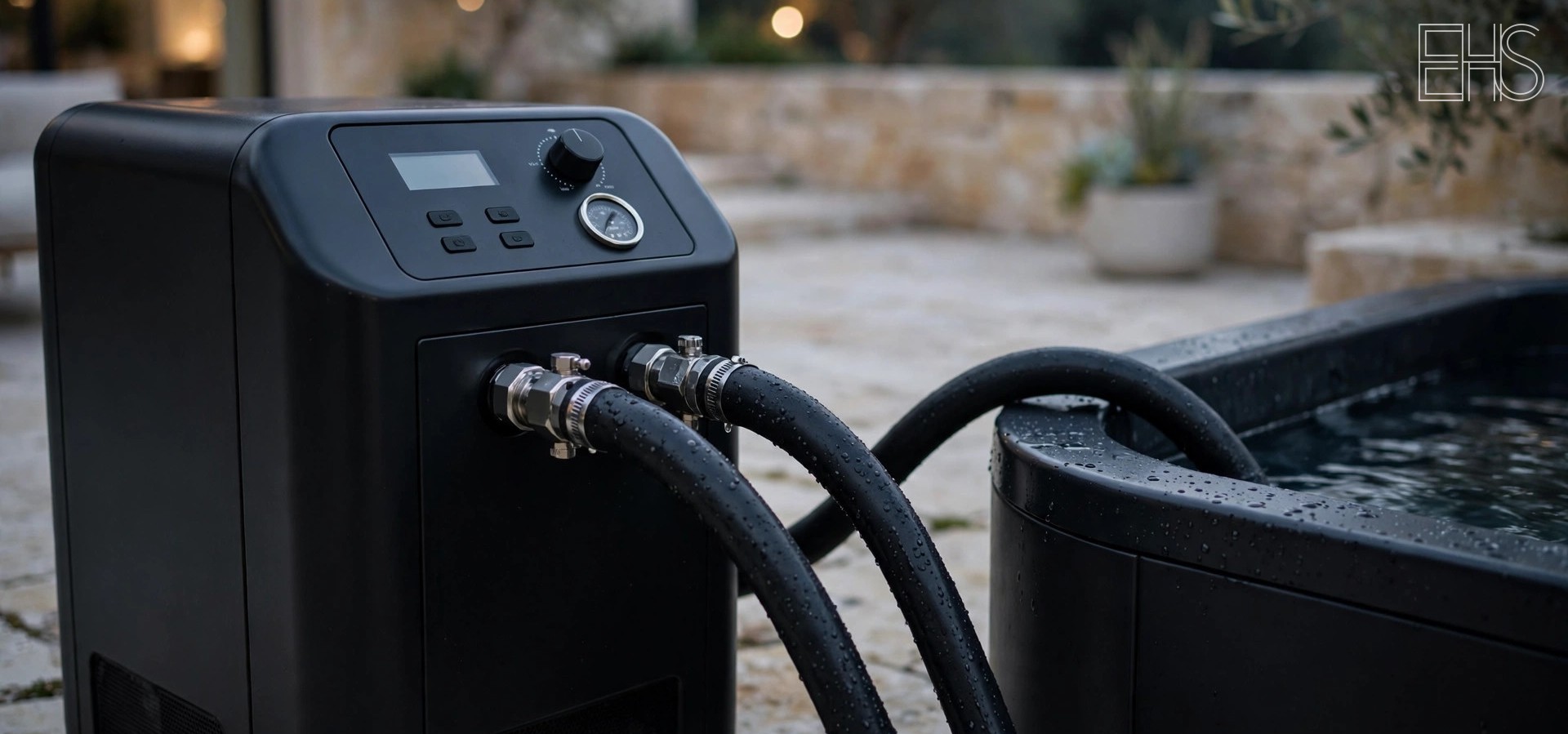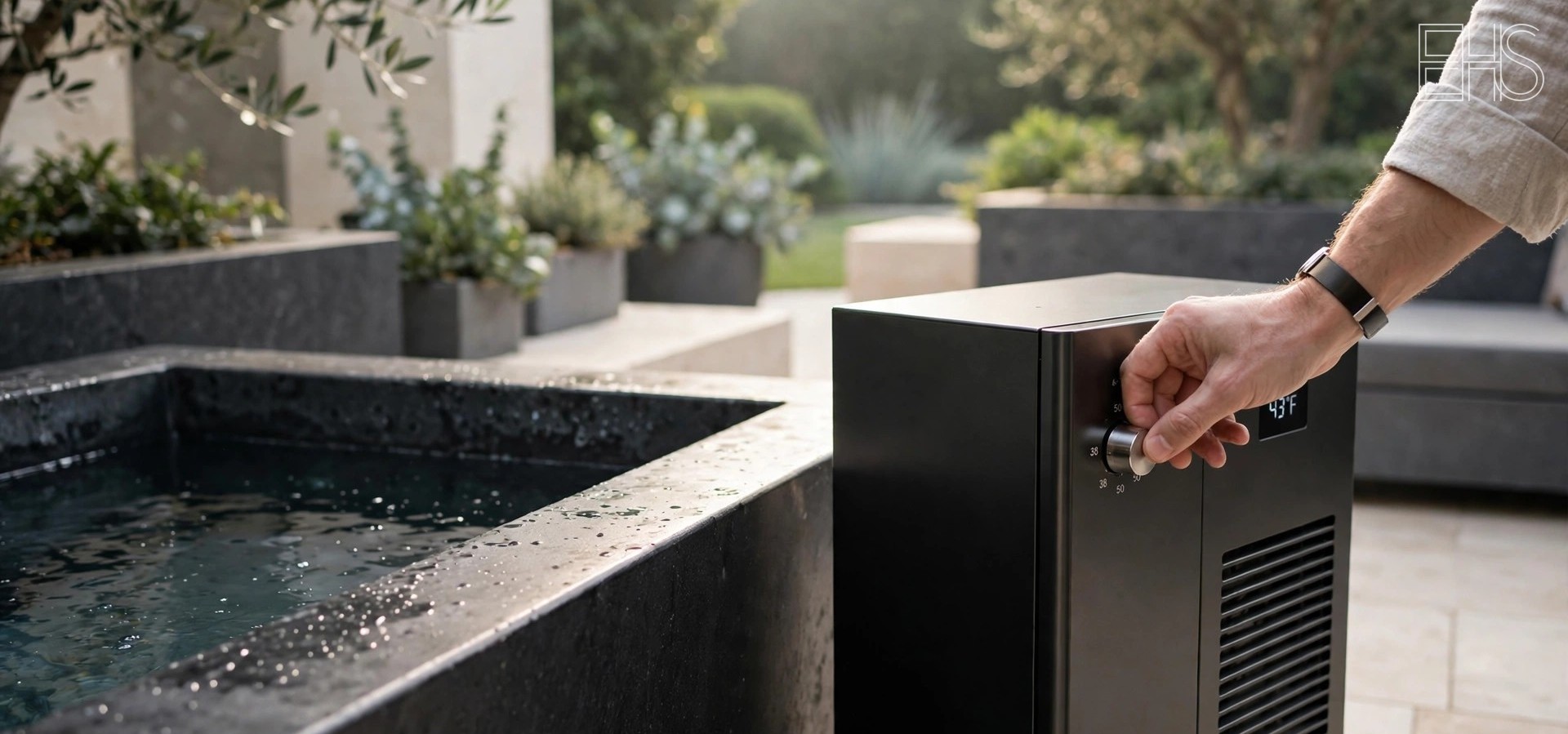
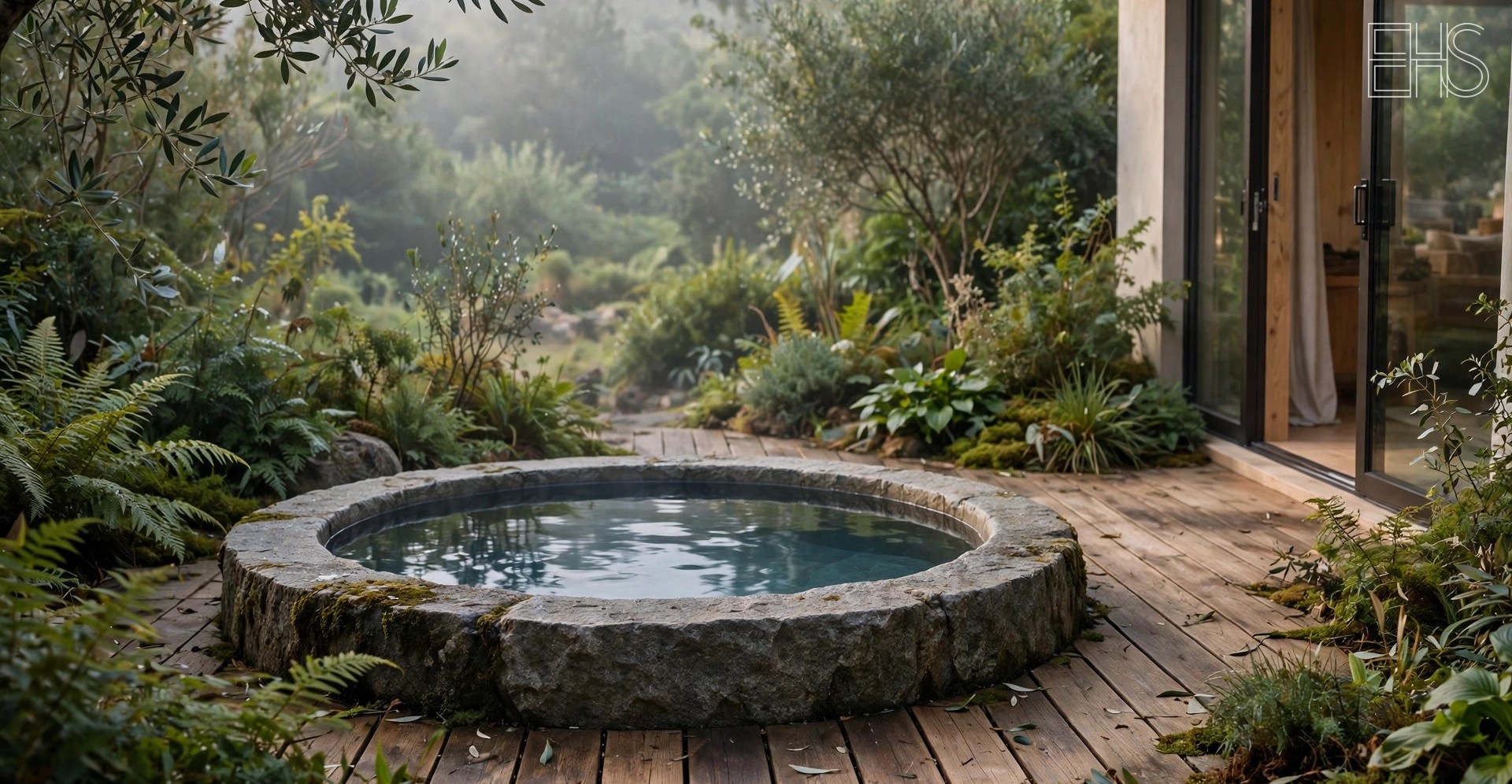
The tub you choose matters less than where you put it. Placement decides your chiller workload, your maintenance routine, your privacy, and ultimately whether the plunge becomes a daily ritual or a seasonal novelty. Indoor and outdoor setups each have a genuine case, and the right answer depends on your climate, your floor plan, and how much maintenance honesty you can muster.
This guide compares the two honestly: the comfort and climate control of indoors against the space and simplicity of outdoors, plus the ownership realities nobody puts in the brochure. If you are still weighing the whole purchase, our decision framework covers budget, space, and cooling in order.
A brief note before the comparison: cold immersion is not for everyone. Start gradually, keep early sessions short, and skip the plunge when you feel unwell.
The Case for Indoors
Indoor placement means climate stability, and climate stability means everything in cold plunging works less hard. The chiller holds temperature with shorter cycles, water stays cleaner between sessions, and you step in and out without facing January air in swimwear.
The best indoor locations are not living rooms. Garages top the list: concrete or sealed floors that tolerate splashes, power usually available, and enough separation from bedrooms that pump hum at 6 a.m. does not become a household negotiation. Basements run a close second with naturally cool ambient temperatures that reduce chiller workload, though drainage and dehumidification need thought. A spare room or large bathroom works for compact tubs when the floor is waterproof and ventilation exists; wood floors and wall-to-wall carpet do not belong under 100 gallons of water, no matter how confident you feel about your splash discipline.
Indoor advantages compound quietly. No UV exposure means no algae blooms from sunlight and slower degradation of tub surfaces. No leaves, pollen, or windblown dust means the filtration system handles only what you bring into the water. Temperature swings are gentler, so the chiller cycles less, runs quieter, and lasts longer. And the ritual becomes weatherproof: rain, heat waves, and frost do not reschedule your mornings.
The costs of indoors are real. A chiller's waste heat has to go somewhere, and in an enclosed room that means the space warms slightly with each cooling cycle. Humidity rises with every uncovered minute; without ventilation, a closed room holding an open tub will show condensation on walls and windows within weeks. Power needs are modest (a standard outlet suffices for most units) but the circuit should not be shared with a freezer or workshop tools that trip breakers. And there is the human factor: an indoor plunge corner needs to look intentional, or it reads as a storage problem.
The Case for Outdoors
Outdoors solves the two biggest indoor headaches: moisture has somewhere to go, and noise has somewhere to dissipate. A patio, deck, or backyard corner gives you drainage options, ventilation that no fan can match, and a setting where the plunge feels like part of the landscape rather than a machine in a room.
Patios and decks are the natural choice for most owners. A level, stable surface is nonnegotiable, so confirm the deck's load capacity first: water weighs 8.3 pounds per gallon, and a filled 100-gallon tub with chiller and a person approaches half a ton. Backyard corners work beautifully with a gravel or concrete pad, a privacy screen, and a path you are willing to walk barefoot in February. Some owners build a small deck pad specifically for the tub, which also solves the leveling and drainage questions in one project.
Outdoor advantages are about friction, not comfort. Splashes, drips, and drain-day water go to the ground, not the floor. The chiller's fan noise and waste heat dissipate into the air instead of your garage. Winter does half the cooling for free in colder regions, dropping the chiller's workload to nearly nothing for months. And there is an honest aesthetic pleasure in stepping into cold water under open sky that an indoor corner cannot replicate.
The costs of outdoors are maintenance and exposure. Sunlight is the enemy: direct afternoon sun warms the water, feeds algae, and degrades covers and tub finishes, so shade (a pergola, a sail, or a north-facing wall) is close to mandatory. Windblown debris, pollen, and in some regions wildfire ash land in uncovered water constantly. Freeze protection becomes your responsibility wherever winter temperatures drop below 32°F, which means a drain-down plan, insulated plumbing, or a chiller that keeps circulating through cold snaps. And privacy is a genuine consideration: stepping in and out in swimwear, possibly steaming visibly on cold mornings, within sight of neighbors.
Climate Is the Tiebreaker
In hot climates (regular summer days above 85°F), indoor placement is the stronger default. Air-conditioned garages and basements cut chiller workload dramatically. If you do place outdoors in a hot region, shade the unit aggressively, oversize the chiller, and budget running costs at the higher end.
In temperate climates, the choice is genuinely free. A mid-range chiller handles outdoor summers, winters need almost no active cooling, and neither placement carries a penalty. Pick by lifestyle: do you want the ritual steps from your shower, or do you want it out of the house?
In cold climates (regular freezing winters), outdoors becomes the value play. Ambient air chills the water for free for months, and many owners in these regions run the chiller only in summer. The catch is your own January motivation and freeze protection for the plumbing. An indoor or garage placement solves both, which is why cold-climate owners who plunge daily skew indoor despite the free winter cooling.
For the full ice-versus-chiller economics behind these decisions, see our comparison of chillers and ice.
The Comparison, Head to Head
| Factor | Indoor | Outdoor |
|---|---|---|
| Temperature stability | Excellent; chiller works less | Seasonal swings; chiller works harder in summer |
| Moisture management | Needs ventilation; condensation risk | Self-venting; splashes go to ground |
| Debris in water | Minimal; only what you bring in | Leaves, pollen, dust; cover discipline essential |
| UV and sun exposure | None | Needs shade; UV degrades covers and feeds algae |
| Noise | Pump hum contained in room; consider bedrooms | Dissipates outdoors; neighbors may notice at night |
| Freeze protection | Rarely an issue | Drain-down or circulation plan required below 32°F |
| Privacy | Total | Needs screening; sightline planning required |
| Drainage | Needs a planned route (drain, pump, hose) | Gravity and ground do the work |
| Winter motivation | High; warm house, short walk | Lower; cold air, wet feet, dark mornings |
| Aesthetic integration | Needs intentional design to avoid clutter | Natural fit with patio or garden design |
Power, Drainage, and the Unsexy Details
Both placements need power within cord reach, ideally on a circuit that is not shared with heavy loads. Check the manual: some units call for a dedicated circuit. Outdoor runs need weatherproof, ground-fault-protected outlets; if the only path crosses a lawn, budget for a buried conduit run by an electrician rather than an extension cord across the grass.
Drainage deserves more planning than it usually gets. Water changes happen every few weeks to a few months depending on your filtration (see our water care guide for the full routine). Indoors, that means a floor drain, a pump-and-hose route to a utility sink, or a very long hose to the garden. Outdoors, a downhill hose run to a garden bed is the elegant answer; chlorinated or sanitized water should not go directly onto prized plantings, so route it to lawn or a drain instead.
Delivery is the detail people forget until the truck arrives. Measure the path, not just the destination: doorways, gates, stairwells, and turns. If the only route to the backyard is through the house, confirm the unit fits through the narrowest doorframe before ordering.
Making the Decision
Run through these five questions honestly:
- What are my summer highs? Above 85°F regularly leans indoor or heavily shaded outdoor with an oversized chiller.
- Do I freeze in winter? Regular sub-32°F nights make outdoor freeze protection a real maintenance task, not a footnote.
- Can my indoor space handle moisture? If the answer is no ventilation and carpeted floors, indoors is a renovation project, not a placement.
- How much maintenance will I actually do? Outdoor water needs more skimming and cover discipline; indoor needs humidity management. Pick the chore that will not breed resentment.
- Where will I actually plunge in February? Be honest. The best placement is the one that still appeals on a dark, cold morning.
There is no universal winner. A garage in Phoenix beats a patio in Phoenix; a patio in San Diego beats a garage in San Diego. The tub is the same either way. When comparing models, bundles, and installation quotes, verify current rates before booking or buying, since pricing shifts with seasons. The placement decides the ownership.
Frequently Asked Questions
Can I put a cold plunge in my garage?
Yes, and it is one of the most popular placements. Garages offer concrete floors, available power, and separation from living spaces. The two things to address are ventilation (to manage humidity from an uncovered tub) and temperature: an uninsulated garage in a hot climate can still push the chiller hard in summer, while in winter it offers useful protection from freezing.
Does an outdoor cold plunge need a roof or cover?
A full cover is essential everywhere; it is the single highest-leverage accessory for temperature control and water cleanliness. A roof or shade structure is strongly recommended for outdoor units, since direct sun is the primary cause of unwanted warming and algae growth. A pergola, shade sail, or north-facing wall placement all work; the goal is blocking afternoon sun specifically.
Will freezing temperatures damage an outdoor plunge?
They can damage the plumbing and chiller if water freezes inside them, which is why a freeze plan is required wherever winter lows drop below 32°F. Options include draining the system before deep cold, insulating exposed plumbing, or keeping the chiller circulating (moving water resists freezing far longer than still water). The tub shell itself generally tolerates cold; pumps and fittings are the vulnerable parts.
How much moisture does an indoor plunge add to the room?
Noticeably. Every minute the tub sits uncovered, water evaporates into the room, and each entry and exit adds splashes and wet footprints. In a closed, unventilated room, condensation appears on cool surfaces within weeks. The fixes are simple: keep the cover on between sessions, ventilate the room (a window, an exhaust fan, or a dehumidifier), and choose waterproof flooring. It is a solved problem, but it needs solving.
Do I need an electrician for an outdoor installation?
Often, yes. Most chillers run on a standard household outlet, but outdoor placement requires that outlet to be weatherproof and ground-fault protected. If your patio lacks one, or if the manual calls for a dedicated circuit, a licensed electrician is the right call. Extension cords across lawns are a temporary fix at best and a hazard at worst; a buried conduit run is the permanent answer.
Can I move a plunge from indoors to outdoors seasonally?
Technically yes, practically it is more trouble than it sounds. Draining, disconnecting the chiller, moving a heavy unit, and re-leveling it outdoors is a half-day project each way, and repeated moves increase the chance of fitting damage. Most owners who try seasonal moves do it once, then pick a permanent spot. If flexibility matters, choose a lighter portable tub rather than an all-in-one.
This guide is for informational purposes only and is not medical advice. Speak with a qualified professional before making health decisions.