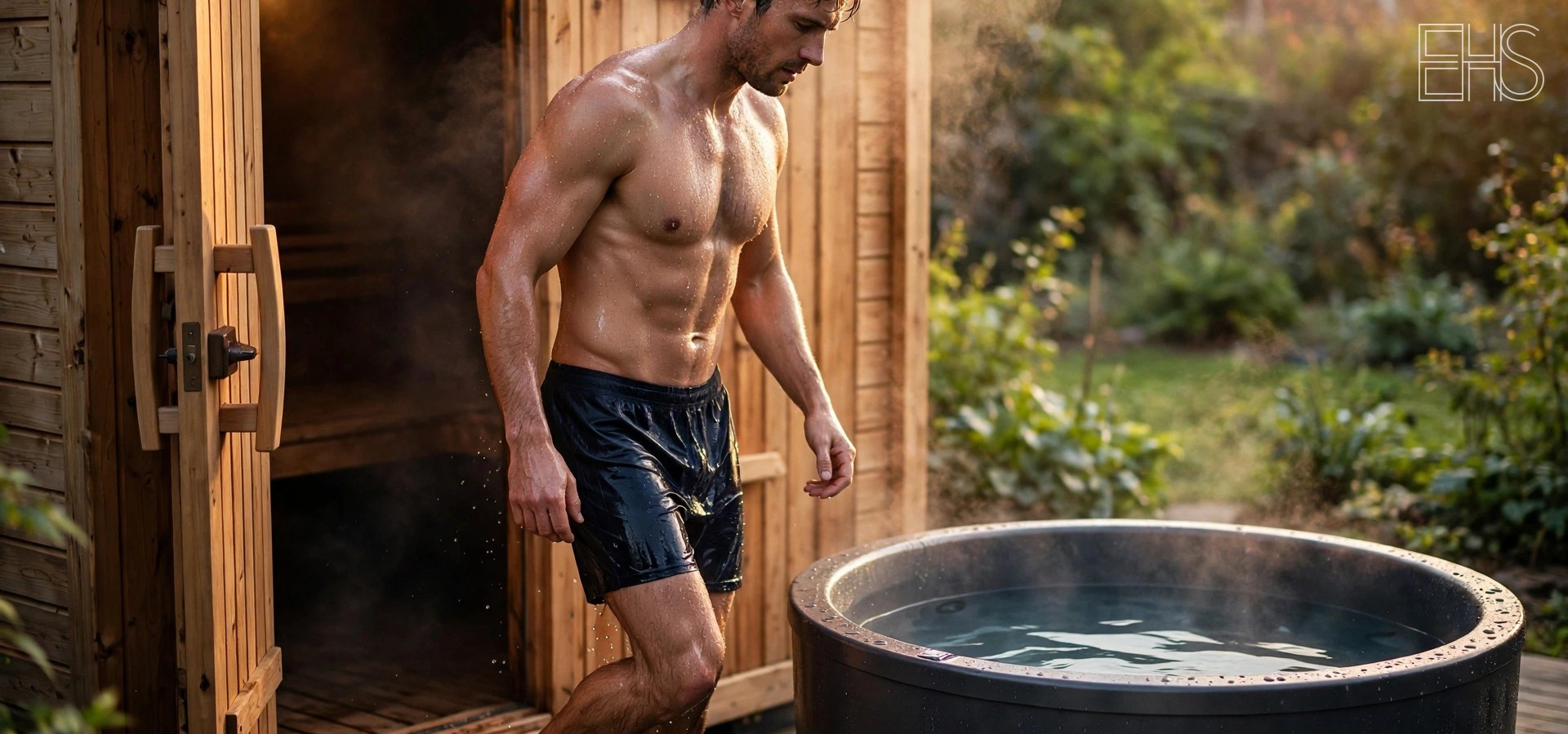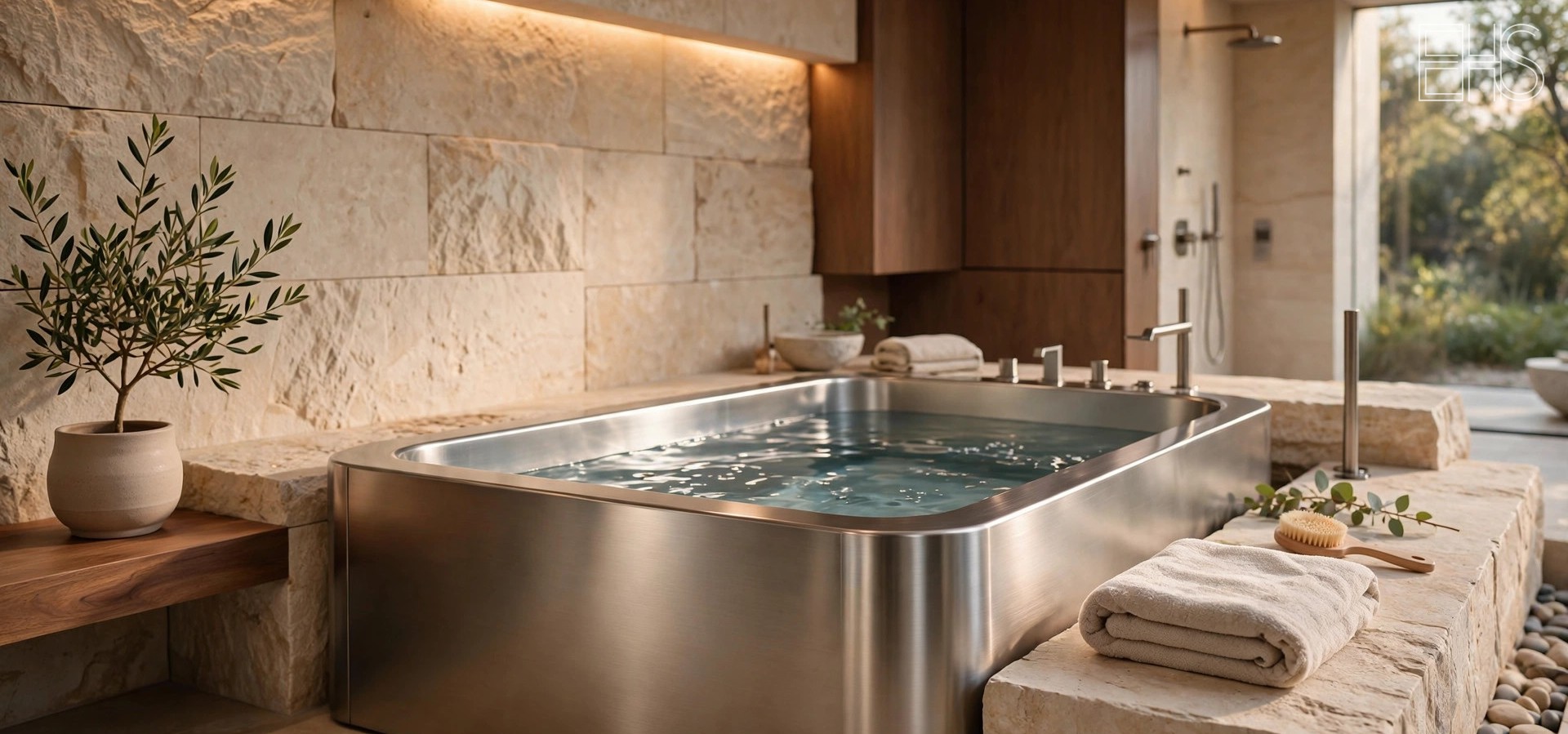
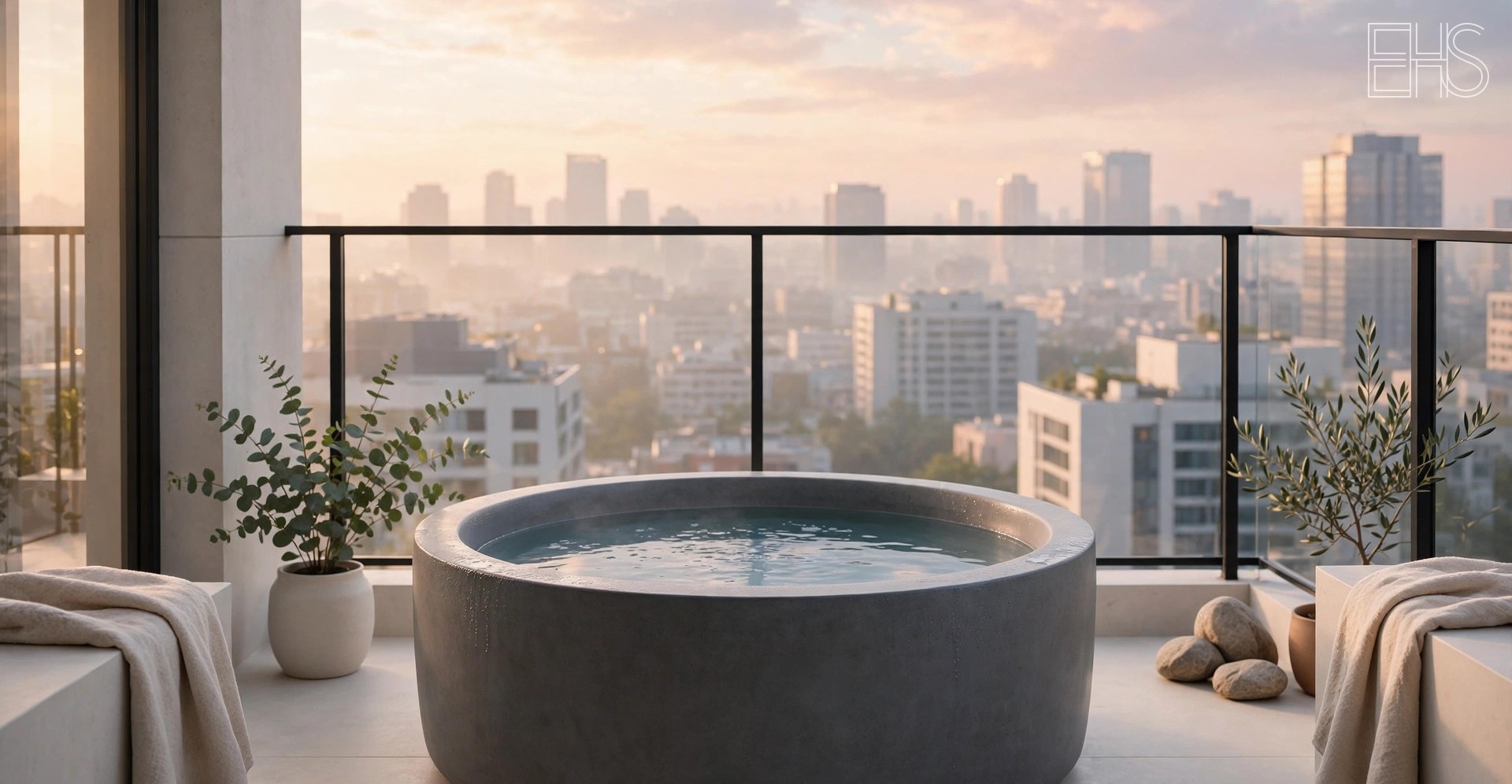
Not everyone has a backyard, a garage, or a spare room. Apartments, condos, townhouses, and compact homes hold millions of would-be plungers who assume the habit requires square footage they do not have. It does not. Small-space plunging is a solved problem with its own product category, its own placement tricks, and its own honest tradeoffs. This guide covers all three.
Worth stating plainly: cold immersion is not for everyone. Work up gradually, keep early sessions short, and sit out days when you feel off.
What "Small Space" Actually Allows
Start with real dimensions. A compact plunge tub needs roughly a 3-by-3-foot footprint, plus about 2 feet of clearance on at least one side for entry and maintenance. That is smaller than a washing machine's working space. Balconies, bathroom corners, large closets with waterproof floors, utility nooks, and the end of a hallway can all work. Measure first; most people overestimate how much room a tub needs and underestimate the clearance around it.
Weight is the harder constraint. Water weighs 8.3 pounds per gallon, so a compact 60-gallon tub with a person aboard approaches 600 pounds concentrated in nine square feet. Ground floors and concrete slabs handle this without thought. Upper floors, wooden balconies, and older decks need verification: check the building's load ratings or ask the property manager before filling anything above the ground floor. This is the one small-space question where guessing is not acceptable.
The Compact Product Category
Manufacturers now design specifically for tight quarters. The main options:
Compact rigid tubs. Smaller-diameter round or oval tubs (typically 60 to 80 gallons) with insulated walls, designed for one person and a corner. These pair with compact chillers or run on ice. Typical complete setups list from around $1,000 to $2,500 depending on cooling; verify current rates before booking or buying, as compact bundles are a fast-moving segment.
Inflatable tubs. Drop-stitch and reinforced-PVC tubs that set up in under an hour and pack flat when guests visit. The smallest pack into a duffel bag. Insulation is modest and most run on ice, but for renters and the space-constrained, the ability to make the tub disappear is the killer feature. Typical prices run from around $100 to $400 before cooling.
Convertible and dual-use designs. A smaller number of products serve double duty: plunge tubs designed to look like side tables or planters when covered, and bathtub-conversion kits that chill your existing tub. The latter deserves attention from apartment dwellers: if you already have a bathtub, a compact chiller unit that circulates and cools the bathwater gives you a plunge with zero additional footprint.
Portable ice barrels. Insulated barrels remain the smallest rigid option: a roughly 2.5-foot diameter circle, ice-cooled, no power needed. They lack filtration and need water changes every few days, but nothing fits a tighter space or budget. Our decision framework covers where barrels fit in the broader buying picture.
| Option | Footprint | Cooling | Typical setup cost | Best for |
|---|---|---|---|---|
| Compact rigid tub | ~3 x 3 ft | Chiller or ice | From around $1,000 to $2,500 | Dedicated corner, owners |
| Inflatable tub | ~3 x 3 ft (packs flat) | Usually ice | From around $100 to $400 | Renters, temporary setups |
| Bathtub chiller kit | Zero (uses existing tub) | Compact chiller | From around $800 to $1,500 | Apartment dwellers with a tub |
| Insulated barrel | ~2.5 ft diameter | Ice | From around $100 to $300 | Tightest spaces and budgets |
Placement Tricks for Tight Quarters
The balcony. The classic small-space placement: outdoors, ventilated, and separate from living areas. Confirm three things: the balcony's weight rating, the building's rules on water installations and drainage, and a power route for the chiller that does not cross a walkway. A privacy screen solves the sightline question, and a drip mat under the tub protects the balcony surface and the neighbor below.
The bathroom. A compact tub beside the shower is the most convenient placement imaginable: waterproof floors, a drain nearby, and privacy built in. The constraints are floor space (measure the door swing and the tub's entry clearance) and humidity (run the exhaust fan; keep the cover on). Bathtub chiller kits are the zero-footprint alternative here.
The utility nook or closet. Laundry areas and large storage closets often have waterproof-ish floors, power, and a drain or sink nearby. Ventilation is the question to answer: an enclosed nook needs airflow or a dehumidifier to handle evaporation from the open tub.
The parking-adjacent spot. For townhouse and condo owners, a compact tub at the edge of a parking pad or in a storage cage area can work where balconies cannot. Check HOA or strata rules first; many regulate visible water installations.
Renters: The Special Case
Renters face two constraints owners do not: lease terms and move-out condition. The strategy is reversibility. Favor setups that leave no trace: inflatables that pack away, compact tubs on protective mats with no plumbing modifications, and chiller power from existing outlets rather than new circuits.
Read the lease for water-damage liability language and check renter's insurance coverage for accidental water damage; a 60-gallon spill is a real event in an apartment. Document the space with photos before setup. And when choosing between ice and a chiller, note that the ice-versus-chiller math shifts for renters: a chiller is an investment in a fixture you may not keep, while ice is pure operating cost with nothing to move.
Noise, Neighbors, and Building Etiquette
Small spaces mean close neighbors, and chillers hum. Compact units are quieter than full-size ones, but a chiller cycling at 2 a.m. on a shared-wall balcony will be noticed. Mitigations: place the chiller on a vibration-dampening mat, schedule cooling cycles for daytime hours if the unit allows, and keep the cover on (a well-insulated tub holds temperature overnight with minimal cycling).
Water changes need a neighbor-conscious plan. Draining 60 gallons off a balcony onto the unit below is not a plan; it is an incident. Route a hose to a proper drain, use a small pump to a sink or toilet, or drain into the bathtub. Discuss the setup with adjacent neighbors before the first water change, not after the first complaint.
Building rules vary enormously: some HOAs and stratas explicitly permit portable water installations, others ban them, and most are silent, which means asking. A short written confirmation from the property manager is worth more than any verbal assurance.
The Honest Tradeoffs
Small-space plunging asks for three compromises. Water volume is smaller, which means temperature swings faster when you get in and the chiller or ice works proportionally harder per gallon. Maintenance is more frequent: smaller water volumes foul faster, so filtration and water changes need more discipline (our water care guide covers the routines). The ritual is less luxurious: a compact tub on a balcony is a discipline tool, not a spa experience, and buyers should want it for the former.
None of these are disqualifying. Thousands of daily plungers use compact setups in apartments and condos. The habit survives on convenience and consistency, and a tub three steps from your bedroom beats a beautiful backyard setup you visit twice a month.
Frequently Asked Questions
Can I put a cold plunge on an apartment balcony?
Often yes, subject to three checks: the balcony's structural weight rating (a filled compact tub approaches 600 pounds), building or HOA rules on water installations, and a safe power route for the chiller. Get the weight rating in writing from the property manager or building documents; this is not a detail to estimate. Ground-floor patios avoid the weight question entirely.
Will a chiller bother my neighbors?
It can, in close quarters. Compact chillers are relatively quiet, but the low hum carries through shared walls and across small balconies, especially at night. Vibration-dampening mats, daytime cooling schedules, and good tub insulation (which reduces cycling) all help. If noise is a hard constraint, an ice-cooled setup is silent.
What is the smallest practical cold plunge setup?
An insulated barrel at roughly 2.5 feet in diameter is the smallest rigid option; inflatables pack smaller when stored. For a seated full-immersion plunge, most adults need a tub at least 27 to 30 inches in diameter. Below that, you are looking at partial immersion, which changes the experience meaningfully.
How do I drain a tub in an apartment?
A small submersible pump with a hose to the bathtub, sink, or toilet is the standard method; it moves 60 gallons in well under an hour. Never drain over a balcony railing or into a shared courtyard. If your building has a utility sink or floor drain in a laundry area, that is the ideal drain point.
Do I need landlord permission?
Check your lease: many leases require written approval for water-filled installations beyond normal fixtures, and some explicitly assign water-damage liability to the tenant. Even where the lease is silent, written confirmation from the landlord or property manager protects you if a leak ever becomes a dispute. Renter's insurance with water-damage coverage is strongly advisable.
Is a bathtub chiller kit worth it?
For apartment dwellers with a standard bathtub, it is often the best answer: zero footprint, existing waterproofing and drainage, and a compact chiller that circulates and cools the bathwater. The tradeoffs are that the bathtub is occupied during cooling and plunging (plan around household schedules), and cooling a large bath volume takes longer than a compact tub. For solo dwellers, the convenience is hard to beat.
For informational purposes only; not medical advice. A qualified professional can advise on health decisions.