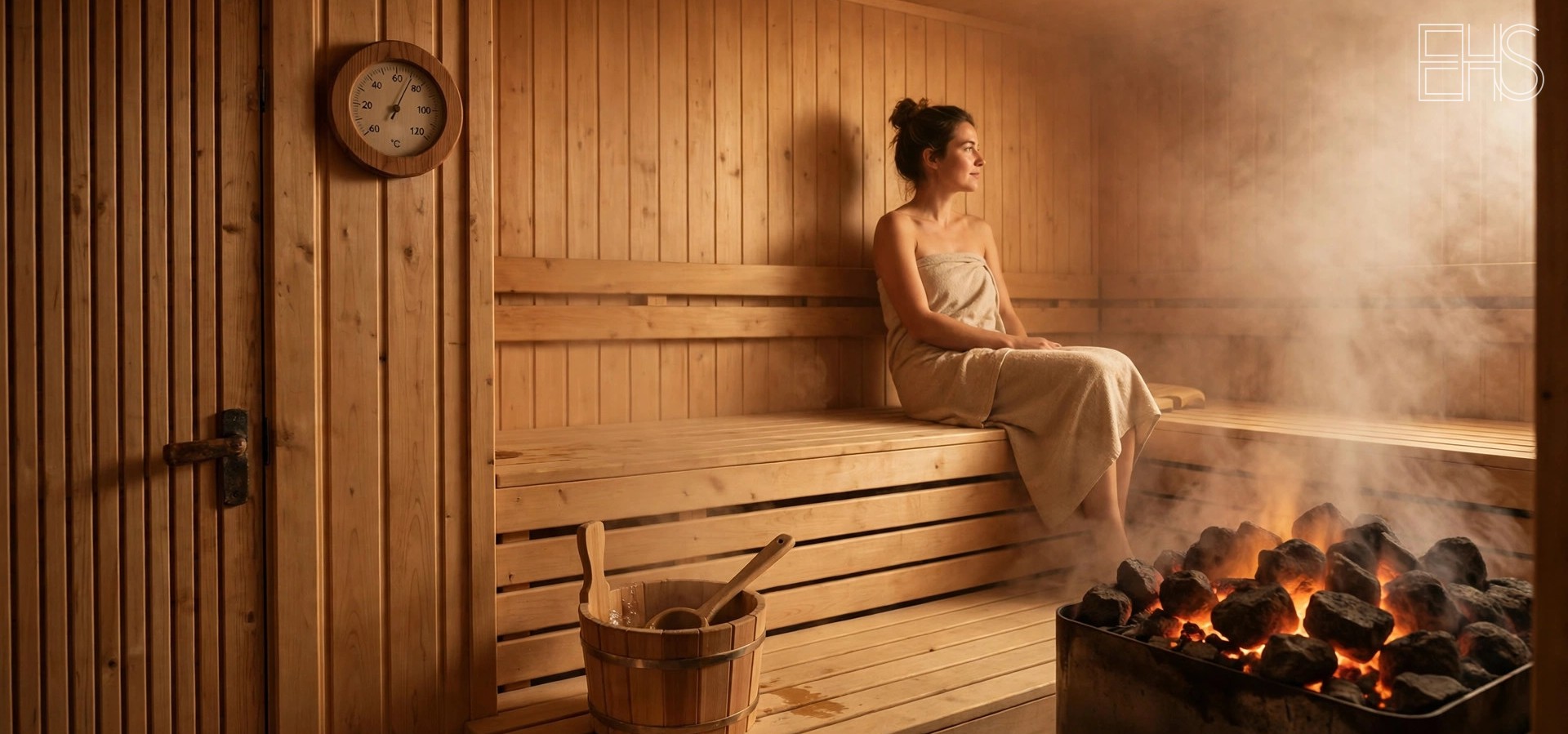
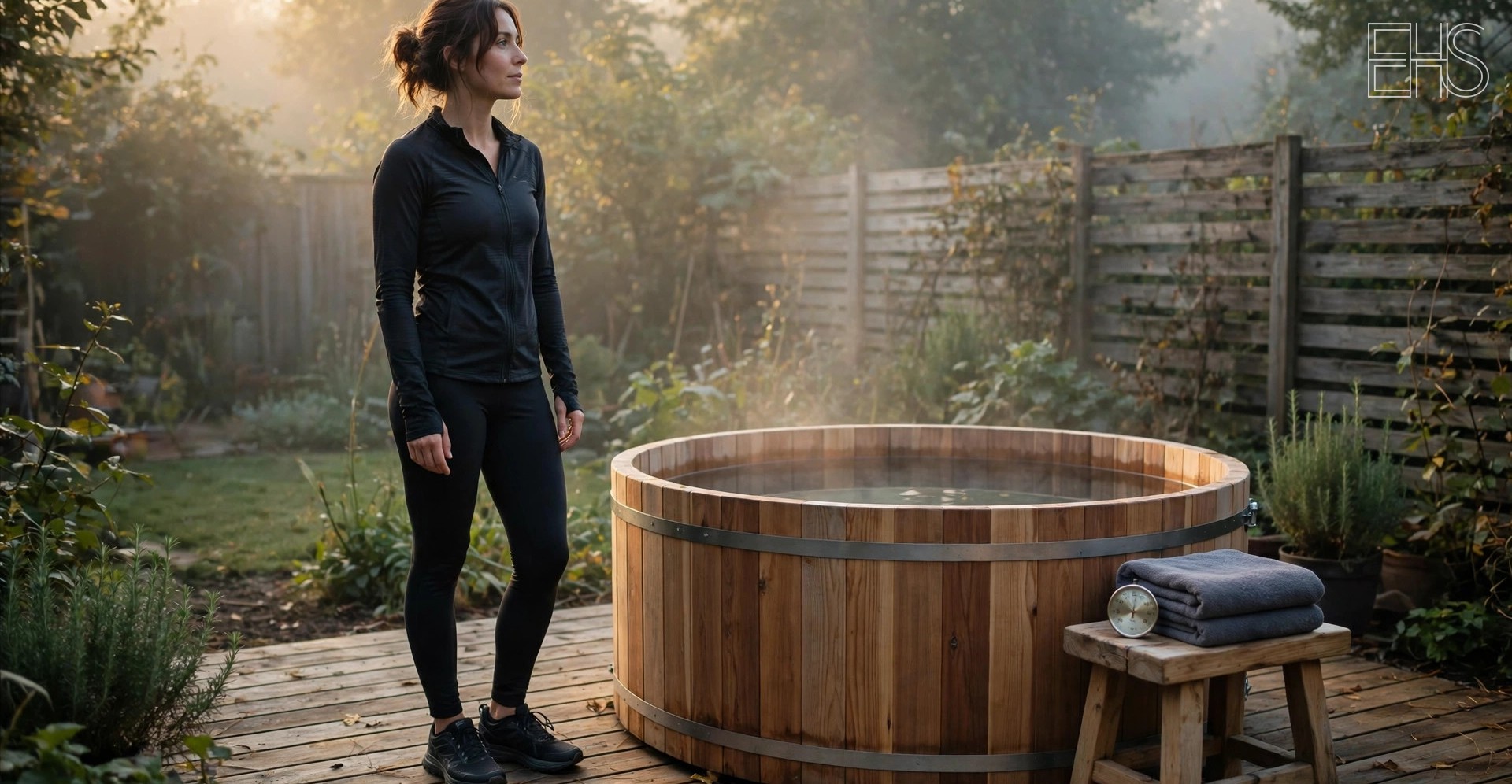
The plunge itself takes two minutes. Choosing when to take it takes longer, because the same two minutes feel different at seven in the morning and seven in the evening. One wakes you up; the other settles you down. The best time depends on what you want the plunge to do for your day.
This guide compares the two slots across energy, sleep, and training, and ends with a two-week test for finding the one you keep. Our cold plunge safety guide explains who should avoid cold immersion altogether. One caution first: cold water is not for everyone. Begin gently, keep early sessions short, and skip any day you feel unwell.
Key takeaways - Morning plunges suit energy and routine: the water is coldest overnight and the session is done early. - Evening plunges can work, but keep them two to three hours before bed. - Around training, separate the plunge from hard strength work by several hours. - The slot you repeat beats the slot that looks ideal on paper.
What Changes With the Clock
Your body runs on a daily rhythm, and cold water meets a different body in the morning than in the evening. Core temperature is lowest in the early hours and climbs through the day, peaking in the late afternoon. Cortisol, the hormone tied to waking alertness, rises in the first hour after waking and falls across the day. None of this makes one slot right, but it explains why the same water can feel bracing at dawn and almost mild by dinner.
The water changes too, at least in an unchilled tub. A tub left outside overnight sits at its coldest first thing in the morning, then warms through the day as the sun hits it. The gap can be several degrees, and three degrees separates a beginner temperature from an intermediate one. Our guide to choosing a cold plunge lays out ice, inflatable tubs, and chilled systems side by side.
The Case for Morning
Morning is the default slot for most regular plungers. First, the water is at its coldest, so an unchilled setup needs no ice top-up. Second, the session is finished before the day can get in the way: no meeting runs late, no tiredness talks you out of it. Third, the habit anchors to waking up, which makes it easier to repeat than a slot that competes with dinner and family time.
The morning plunge also stacks with a morning routine: water, a short walk, breakfast. Our beginner protocol recommends a regular time of day for the first month, and morning is the easiest time to keep regular.
There is a catch: mornings are rushed, and a rushed plunge is a bad plunge. If fitting a morning session in means skipping the towel, the warm layers, and the ten minutes of gentle movement afterwards, the slot is working against you.
The table below compares the two slots side by side.
| Factor | Morning plunge | Evening plunge |
|---|---|---|
| Water temperature, unchilled tub | Coldest overnight, often ready with no ice | Warmest by late afternoon, may need ice |
| Energy after the session | Alertness and a clear start | A calm, settled feeling as the day ends |
| Effect on sleep | Little effect, hours from bedtime | Can delay sleep if too close to bed |
| Routine stickiness | High, anchored to waking | Lower, competes with dinner and evening plans |
| Best for | People who want the habit done early | People with rushed mornings and free evenings |
The Case for Evening
Evening plunging has its own logic. After a long day, the cold water draws a line under the working hours. The contrast is sharper in the evening because the body is warm from the day, so the first thirty seconds feel more intense.
The real cost of the evening slot is sleep. Cold immersion is stimulating: heart rate rises and breathing quickens. For some people that fades within an hour and sleep is unaffected; for others it lingers, and a nine o'clock plunge turns into a midnight bedtime. Test it with a cutoff: keep evening plunges two to three hours before bed for the first two weeks.
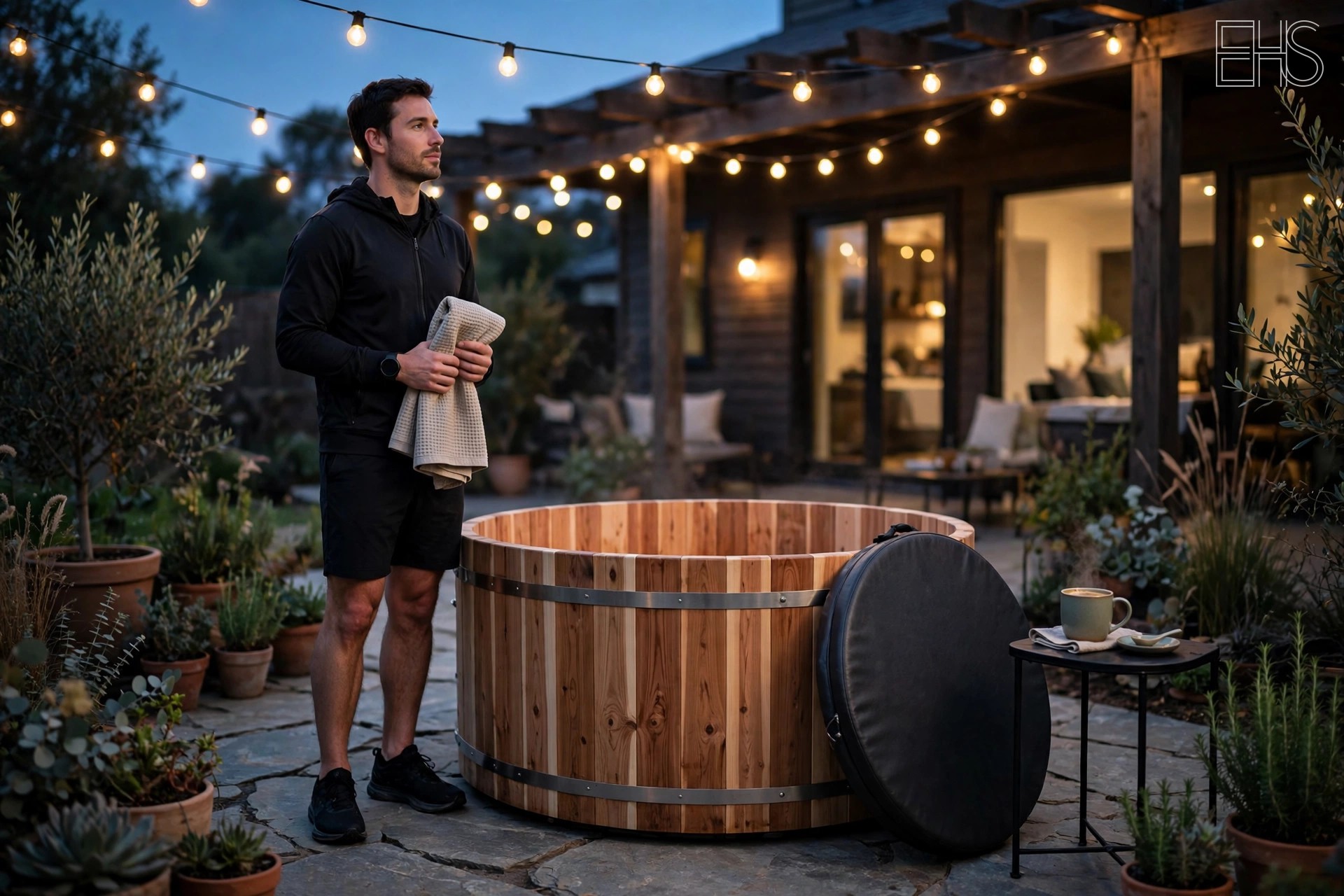
Illustration by EverHealthSpan
Timing Around Training
Training days add a second clock to the question. The issue is not whether to plunge on a training day, but how close the plunge sits to the session. Research on cold immersion after exercise is mixed: some studies associate cold water immersion right after strength training with smaller strength and muscle gains over time, while others find little effect, and the picture for endurance training looks different again. The evidence is not settled enough for a hard rule, but it supports a cautious habit: separate the plunge from hard strength work by several hours.
In practice, a morning plunge and an evening strength session pair well. What deserves caution is the back-to-back version: finishing a heavy lift and stepping straight into cold water within the hour. If your schedule only allows that pairing, a shorter and warmer plunge, around 15C for a minute, is a reasonable compromise. Our evidence review of cold plunge benefits grades what the research supports, including the training question.
Timing Around Sleep
Sleep is where the evening slot earns its caution. The body cools as bedtime approaches, and that cooling is part of how sleep starts. A cold plunge drops skin temperature sharply and then triggers rewarming, which can leave the body feeling alert rather than drowsy. The practical rule is a cutoff: finish at least two to three hours before bed, and keep the session shorter and a degree or two warmer than your morning version.
A warm shower after an evening plunge brings the skin back to a comfortable temperature quickly. If sleep is your main worry, the morning slot removes the question entirely: a dawn plunge is eight or more hours from bedtime.
The Setup That Makes Timing Easy
Timing comparisons only mean something when the temperature is the same in both slots, which an unchilled tub rarely holds. Ice melts and the sun warms the water, so a morning plunge at 11C can become an evening plunge at 15C in the same tub. That drift makes it hard to tell whether a slot feels different because of the time of day or because of the water.
A chilled tub solves this by holding a set temperature around the clock. For a steady-temperature setup, the Renu Cold Stoic 2.0 (affiliate link) is a chilled setup with an integrated chiller, filtration, and ozone, priced from around $9,499; verify current rates before buying. The point is the thermostat: the same temperature morning and evening, so the test below measures timing alone.
Finding Your Slot: A Two-Week Test
The honest way to choose is to test it on yourself: one week in each slot, with everything else held steady. Keep the temperature, duration, and breathing pattern the same, and record three things each day: alertness in the hour after, sleep that night, and whether the session happened. The third measure matters most, because a slot you skip is not a slot.
| Week | Slot | Record after each session | |---|---|---|---| | 1 | Morning, within an hour of waking | Energy after, whether it happened | | 2 | Evening, at least two to three hours before bed | Energy after, sleep, whether it happened |
If your tub holds a steady temperature, the test is clean: any difference you notice belongs to the time of day. A thermostat-controlled option such as the Renu Vero (affiliate link) keeps the water at the same temperature morning and evening, priced from around $7,200; verify current rates before buying.
After two weeks, the answer is usually obvious: one week will have more completed sessions or better sleep. If they look the same, the slot does not matter much, and the right choice is whichever fits your calendar.
What If Your Schedule Only Allows One Slot
Most people do not get to choose freely. Shift work, school runs, and training times pick the slot for you. Timing is a secondary variable: the parts that matter most are the temperature, the duration, and the repetition. A consistent evening plunge beats a theoretical morning plunge that never happens, and a lunchtime plunge beats both if lunch is the only free hour.
If only one slot is possible, make that slot easy. Lay out the towel, the timer, and the warm layers the night before, or set a phone reminder for an evening session. Keep the session short on busy days rather than skipping it: sixty seconds at your usual temperature keeps the habit alive. Our cold plunge versus cold shower comparison covers lighter-touch alternatives for evenings when a full plunge feels like too much.
The evidence base is still developing: Cain and colleagues pooled 11 studies with 3,177 participants in a 2025 systematic review and meta-analysis, finding links to short-term mood and stress, while cautioning that longer-term effects are still uncertain. Treat timing as a personal experiment: try a slot, keep notes for two weeks, and let your own mornings and evenings decide.
Frequently Asked Questions
Is a morning or evening cold plunge better?
Neither is better in general; it depends on what you want from the plunge. Morning suits energy and routine, since the water is coldest overnight and the session is finished before the day starts. Evening suits winding down and fits after-work training, but it needs a cutoff of two to three hours before bed. Run the two-week test in this guide and keep the slot you complete more often.
Will an evening cold plunge keep me awake?
It can. Cold immersion raises heart rate and alertness, and that stimulation fades within an hour for many people but lingers longer for others. Keep evening plunges at least two to three hours before bed for the first two weeks, and keep them shorter and a degree or two warmer.
Should I plunge before or after a workout?
After is the usual choice, but not right after hard strength work. Some research associates cold immersion right after strength training with smaller strength gains over time, while the evidence for endurance training looks different, so keep several hours between the plunge and a heavy lift.
How long before bed should my last plunge be?
Finish at least two to three hours before bed, so the alertness from the cold has time to fade and the body can settle into its normal evening cooling pattern. A warm shower afterwards helps by bringing the skin back to a comfortable temperature quickly.
Can I plunge twice a day, morning and evening?
You can, but there is little reason to start there. One session a day builds the habit, and a second adds cold exposure without a clear added benefit in the available evidence. If you try two a day, keep the second shorter and warmer than the first.
Does a chilled tub change the timing question?
Yes: it removes the temperature drift that makes morning and evening sessions hard to compare, since an unchilled tub can sit several degrees warmer by evening than at dawn. A thermostat-controlled tub such as the Renu Cold Stoic 3.0 (affiliate link) holds the same temperature in both slots, priced from around $11,399; verify current rates before buying.
This article is for informational purposes only and does not provide medical advice or guaranteed outcomes.