A sauna needs surprisingly little to function: a stove, stones, benches, and a door that closes. Everything else is optional, which is exactly why the accessories market is full of beautiful objects you do not need and a few unglamorous ones that earn their place in every single session.
This guide sorts the essential from the decorative, with honest notes on what each item actually does and what to look for when buying.
The Essentials: Buy These With the Sauna
Bucket and ladle
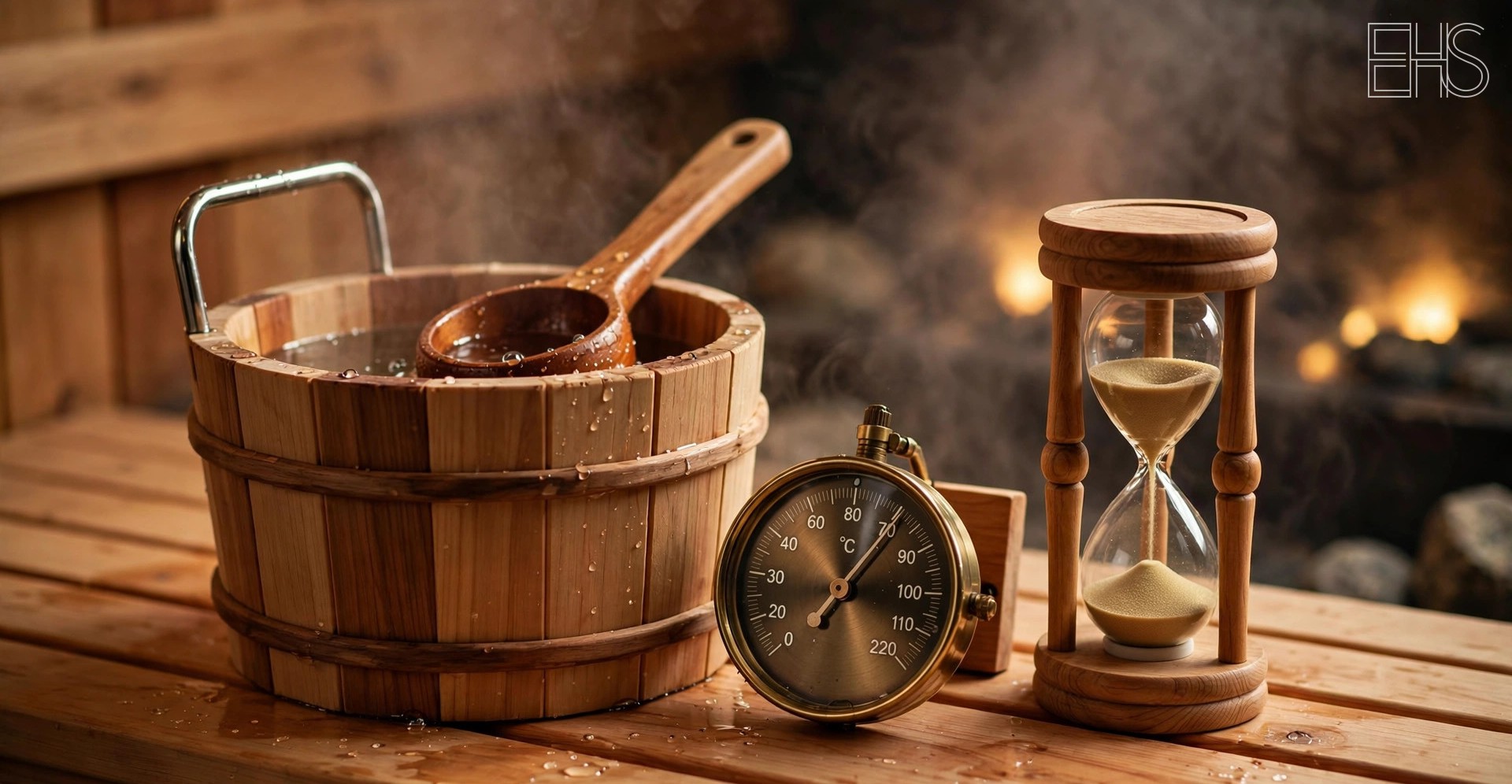
The bucket holds the water; the ladle throws it on the stones. Together they create löyly, the wave of steam that defines the traditional sauna session. This is not a decorative purchase: without a way to put water on the stones, you are missing half the experience.
Look for a wooden bucket (alder, aspen, or pine) with a plastic liner, which prevents leaking as the wood expands and contracts. Metal bands should be stainless, not plain steel, which rusts in the humidity. The ladle should be long-handled wood; short handles put your hand too close to the steam burst. Expect to pay from around $40 to $120 for a good set. Cheap unlined buckets leak within a season; the liner is the feature that matters.
Thermometer
Sauna thermometers are part instrument, part ritual object. The classic wooden-cased thermometer hangs on the wall opposite the stove at head height on the upper bench, which is where the temperature that matters is measured. Most combine a thermometer with a hygrometer, which is genuinely useful: humidity transforms the experience, and knowing both numbers helps you learn your preferences.
Accuracy varies. Treat the reading as indicative rather than laboratory-grade, and replace units whose needles stick. From around $20 to $60.
Hourglass or timer
Time behaves strangely in a sauna, and a timer keeps sessions honest. The traditional 15-minute sand hourglass mounted on the wall is the iconic choice: no batteries, no electronics in the heat, readable through the steam. Modern alternatives include heat-resistant digital timers used outside the hot room.
Either works. The point is having some objective measure, because "a little longer" in 180°F air is how sessions overshoot. From around $15 to $40.
Head support / backrest
A wooden headrest or backrest changes the ergonomics of the upper bench completely. Lying flat on a hard bench gets uncomfortable within minutes; a contoured headrest makes the lying position sustainable for a full session. Backrests serve the same purpose for sitters, keeping backs off the hot wall slats.
These are simple shaped-wood pieces, typically aspen or abaca, and they cost from around $25 to $70. Among all accessories, this is the one owners most often say they wish they had bought sooner.
Comfort Upgrades: Worth It for Regular Users
Sauna textiles: towels, seat covers, and wraps
Hygiene and comfort both argue for sitting on something. A cotton or linen sauna towel on the bench absorbs sweat, protects the wood from staining, and feels better than bare slats. Dedicated sauna seat pads (small, shaped, washable) do the same job with less fabric. Linen is the traditional premium choice: it handles heat and repeated washing better than standard cotton.
Budget from around $20 to $60 per textile piece, and buy enough to rotate through the laundry. This is a recurring small cost of sauna ownership, not a one-time purchase.
Essential oils and aroma
A few drops of eucalyptus, birch, or pine oil in the ladle water adds a scent layer to the steam. The effect is pleasant and entirely optional. Two cautions: use oils made for sauna use (concentrated, no synthetic carriers that could irritate airways in heat), and use sparingly: a few drops per bucket, not per ladle. Oils can also stain unfinished wood over time, so some owners keep a dedicated "aroma bucket."
From around $10 to $25 per bottle, which lasts months.
Lighting
Most saunas ship with basic lighting, and most owners eventually upgrade it. The options:
- Himalayan salt lamps or stone shades: warm, dim, atmospheric. The classic sauna-mood upgrade.
- LED strips behind the backrest: indirect, modern, and many are now rated for sauna temperatures. Verify the temperature rating before buying; standard LED strips fail in sustained heat.
- Fiber-optic star ceilings: the luxury option, with the light source outside the hot room and only the fibers inside. Beautiful, and priced accordingly.
Lighting is the single highest-impact aesthetic upgrade for the money. From around $30 for a simple shade to $500+ for fiber-optic kits.
The Comparison: What to Buy First
| Priority | Accessory | Typical cost | Why |
|---|---|---|---|
| Buy with the sauna | Bucket + ladle | $40 to $120 | Creates the steam; half the experience |
| Buy with the sauna | Thermometer/hygrometer | $20 to $60 | Learn your temperature preferences |
| Buy with the sauna | Timer or hourglass | $15 to $40 | Keeps sessions honest |
| First upgrade | Headrest/backrest | $25 to $70 | Transforms bench comfort |
| First upgrade | Seat textiles | $20 to $60 each | Hygiene and wood protection |
| When settled | Lighting upgrade | $30 to $500+ | Biggest atmosphere improvement |
| Optional | Sauna oils | $10 to $25 | Pleasant scent layer |
| Optional | Footrest, extra ladles | $15 to $50 | Convenience |
Nice to Have: The Honest Assessment
Sauna hats (felt or wool). Traditional in some sauna cultures, worn to protect the head and hair from the hottest air at the ceiling. Functional if you take long, very hot sessions; mostly ceremonial otherwise. From around $15 to $35.
Whisks (vihta/vasta). Bundles of birch twigs used to gently lash the skin, increasing circulation at the surface and releasing a remarkable scent. Deeply traditional, genuinely pleasant, and perishable: a fresh whisk lasts a handful of sessions. Buy them fresh in season or learn to make your own.
Water bottles and carafes. Hydration matters, and a dedicated sauna-side vessel beats fumbling with plastic bottles. Wooden or stoneware carafes look the part. Any clean vessel works; this is aesthetics, not function.
Robe hooks and changing-room fittings. If your sauna has a changing room, proper hooks, a bench, and a mirror make it civilized. Mundane, cheap, and used daily.
Outdoor shower or cold plunge. The cold side of the contrast equation. An outdoor shower is the minimum civilized setup for an outdoor sauna; a cold plunge tub is the full commitment. See our contrast therapy protocols for how the two pair.
What to Skip
- "Ionizing" or "mineral" stones sold at large premiums over standard olivine or peridotite sauna stones. Standard stones, correctly sized and stacked, perform identically.
- Electronic gadgets inside the hot room. Speakers, tablets, and phones do not belong in 180°F heat; electronics fail and batteries dislike thermal stress. Keep the hot room analog.
- Varnishes, sealants, or "sauna wood treatments" for interior surfaces. Interior wood should be unfinished; sealants trap moisture and off-gas in heat.
- Oversized accessory sets bundled with cheap kits. The bucket leaks, the thermometer sticks, and you replace everything within a year. Buy the few good pieces separately.
Caring for Your Accessories
Wooden accessories last years with minimal care: rinse the bucket after use, store it where it can dry (not sealed inside the cooling sauna), and sand the ladle handle if it roughens. Textiles go through the wash like any towel; linen improves with age. Thermometers and hourglasses need nothing but an occasional check that they still read true.
One honest note: heat bathing is not for everyone. If you have a heart condition, are pregnant, or have reservations about heat, keep sessions modest and end them early at the first hint of unease.
For the sauna itself, start with the infrared sauna buyer's guide for the plug-in route, or infrared versus traditional sauna to choose your heat type first. And verify current rates before booking any purchase: accessory pricing shifts with the same promotions as the saunas they accompany.
Frequently Asked Questions
What accessories do I actually need for a sauna?
Four things: a bucket and ladle (for water on the stones), a thermometer, a timer or hourglass, and something to sit on (towel or seat pad). Everything beyond that is comfort or atmosphere. Buy the four essentials with the sauna; add the rest as you learn your habits.
How much should I budget for sauna accessories?
From around $150 to $300 covers the essentials well: a lined bucket and ladle set, a thermometer/hygrometer, an hourglass, and a couple of seat textiles. Comfort upgrades like a headrest, better lighting, and aroma oils can add another $100 to $500 depending on taste. Verify current rates before booking, since bundle deals with the sauna purchase often beat separate orders.
Do I need a special bucket for a sauna?
A proper sauna bucket matters more than it looks. Wooden buckets without liners leak as the wood cycles through wet and dry; a plastic liner solves this. Stainless bands resist the constant humidity. A $25 unlined bucket is a false economy; spend the $50 to $80 for a lined one and it lasts years.
Can I use essential oils in a sauna?
Yes, with restraint. Use a few drops of sauna-grade oil in the bucket water, never undiluted on the stones, and choose oils without synthetic carriers. Eucalyptus, birch, and pine are the classics. Keep quantities small: heavy doses irritate airways in hot air and can stain unfinished wood.
How do I clean sauna accessories?
Rinse wooden pieces after use and let them dry in ventilated air. Wash textiles as you would towels; linen handles frequent washing well. Wipe down thermometers and hourglasses occasionally. Never use harsh chemicals on anything that goes inside the hot room; hot air amplifies fumes.
Do sauna stones need replacing?
Yes. Standard olivine or peridotite stones degrade with repeated thermal cycling: they crack, crumble, and settle, which restricts airflow through the stove. Inspect annually; restack them to restore airflow, and replace the set every 1 to 2 years of regular use. This is routine maintenance, not a defect.