Two small boxes dominate the recovery drawer. Both send a mild current through sticky pads on the skin, yet they do different jobs. TENS quiets pain signals. EMS makes muscles contract.
Key takeaways - TENS (transcutaneous electrical nerve stimulation) targets sensory nerves to change how pain signals are processed. - EMS (electrical muscle stimulation) targets motor nerves and makes a muscle contract. It aims at muscle activation, maintenance, and re-education. - The evidence for TENS is real but modest: a 2022 synthesis of 381 trials found pain lower during or just after treatment than with a sham device, while a 2019 Cochrane overview could not reach a firm conclusion. - A basic wired TENS unit costs around $35 to $50, combo units run around $80 to $350, and pro-level EMS devices run around $320 to $650. - Keep sessions to 15 to 40 minutes, start low, and never place pads on the front of the neck, over the eyes, or on broken skin.
What TENS Actually Is
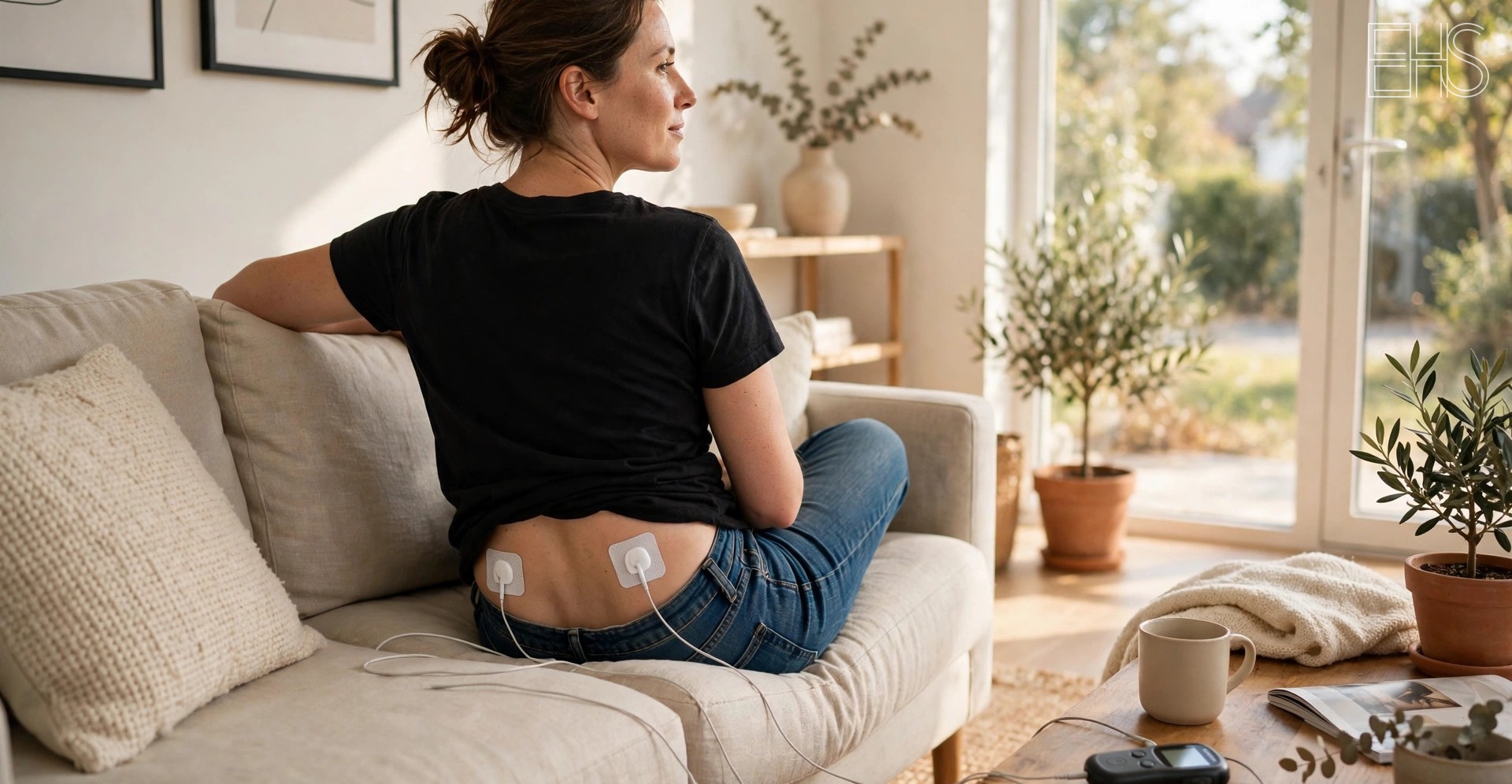
TENS stands for transcutaneous electrical nerve stimulation. A small battery-powered unit sends low-voltage pulses through thin wires to adhesive pads, called electrodes, stuck to the skin near the sore area.
The best-known explanation is gate control theory, proposed in 1965 by researchers Melzack and Wall: pain and touch signals share a pathway to the brain, and stimulating the larger sensory fibres can partly close the gate on the smaller pain-carrying fibres. High-frequency TENS (around 80 to 120 Hz) is associated with that gate effect, while low-frequency TENS (around 2 to 10 Hz) is associated with the release of the body's own pain-relieving chemicals, the endorphins.
A session usually lasts 15 to 40 minutes, and the feeling is a tingling, buzzing, or tapping under the pads: strong but comfortable, never painful, and the muscle underneath usually does not visibly move. Most TENS units sold in the US are cleared by the FDA as Class II devices for temporary pain relief.
TENS changes how pain is felt while the device is on, and for a short time after. It does not fix the cause of the pain, and anyone whose pain is new, severe, or getting worse should get professional guidance rather than reaching for a home device.
What EMS Actually Is
EMS stands for electrical muscle stimulation, also called neuromuscular electrical stimulation, or NMES. It uses the same hardware, a unit plus pads, but the current is stronger and the pulse width wider, and the target is different: motor nerves, the ones that tell a muscle to contract.
When the pulse fires, the muscle tightens involuntarily, then relaxes as the pulse ends. Programs cycle work and rest over a session of around 20 minutes. EMS maintains muscle during periods of inactivity, re-educates a muscle that has gone quiet after an injury, and adds extra contractions around a training session.
Athletes use it as a supplement to training, not a substitute: the contractions are real, but they do not reproduce the coordination, load, or range of a voluntary workout.
If the problem is pain, the device is TENS. If the problem is a muscle that needs to contract, the device is EMS.
TENS vs. EMS at a Glance
The table below puts the two side by side.
| Feature | TENS | EMS |
|---|---|---|
| Primary goal | Temporary pain relief | Muscle contraction and activation |
| Target | Sensory nerves | Motor nerves |
| Sensation | Tingling or buzzing, muscle mostly still | Visible muscle tightening and release |
| Typical session | 15 to 40 minutes | Around 20 minutes, work and rest cycles |
| Best for | Sore back, shoulders, knees, and joints | Muscle maintenance, re-education, recovery sessions |
| Main limit | Relief fades when the session ends | Does not replace voluntary training |
A combo unit covers both columns, which is why it is the default recommendation.
What the Evidence Actually Supports
TENS has been studied more than almost any other home recovery device, and the picture is consistent: a real effect, modest in size, short in duration, and limited by study quality.
The largest synthesis, the 2022 meta-TENS study in BMJ Open, pooled 381 randomized trials covering 24,532 participants, and found pain lower during or just after TENS than with a sham device, at moderate certainty.
The 2019 Cochrane overview reached a more cautious verdict. Across 8 reviews covering 51 trials and 2,895 participants, it judged most trials small and low quality, and could not say with confidence whether TENS helps or harms people with chronic pain. The two reviews are not contradictory: one measured relief during or just after use, while the other asked about longer-term effects and found the studies too weak to answer. A 2023 review informing a World Health Organization guideline found roughly a 0.90-point reduction on a 0-to-10 scale at two weeks, with certainty rated as very low.
For EMS, the strongest support is in rehabilitation, where it helps maintain muscle during immobilisation and supports re-education after injury. In healthy athletes, studies generally find small or inconsistent gains when EMS is added to training. Treat EMS as a useful adjunct, not as a shortcut.
The Five Device Types
Prices below are listed prices from online retailers in November 2026; verify current rates before buying.
| Type | What it does | Typical price | Who it suits |
|---|---|---|---|
| Basic wired TENS | TENS only, dual channel, simple controls | Around $25 to $50 | Pain relief on a budget; first device |
| Wired TENS + EMS combo | Both modes, dual channel, preset programs | Around $80 to $100 | Home users who want both jobs in one box |
| Wireless app pods | TENS + EMS, phone-controlled, no wires | Around $200 to $350 | Athletes who train away from home |
| Pro EMS | EMS-focused, large program library | Around $320 to $650 | Serious athletes and heavy users |
The budget pick is a wired TENS unit such as the TENS 7000, listed around $39, or the AUVON dual-channel unit, listed around $35. The mid-range combo is the iReliev ET-7070, a wired TENS + EMS unit with 14 programs, listed around $80 to $100.
The wireless tier is led by the PowerDot 2.0, now owned by Therabody, with pods that snap onto the pads and run from a phone app, listed around $200 to $350. The pro tier is Compex, whose Sport Elite 3.0 lists around $320 to $450, and the Marc Pro at around $650. Pads are consumables: a set of four lasts roughly 15 to 20 sessions.
A First Session, Step by Step
Plan on about twenty minutes for a first session, from setup to cleanup. Start with clean, dry skin, and place the pads before switching on.
For TENS, place two pads so they bracket the sore area, one on each side, with at least an inch between them. For a sore lower back, that means one pad on each side of the spine, never directly on it. Switch the unit on low, then raise it slowly until the tingling feels strong but comfortable. A good first session runs 15 to 20 minutes.
For EMS, place the pads over the belly of the muscle, not over a joint or a tendon. Start with a recovery program, and raise the intensity until the contraction is visible and firm.
Between sessions, peel the pads off slowly and stick them back on their plastic backing sheet. Skip lotions or oils under the pads, since they block adhesion and spread the current unevenly. Our percussion vs. compression recovery comparison covers the neighbouring tools, and our massage gun buyers guide covers the other handheld option for sore muscles.
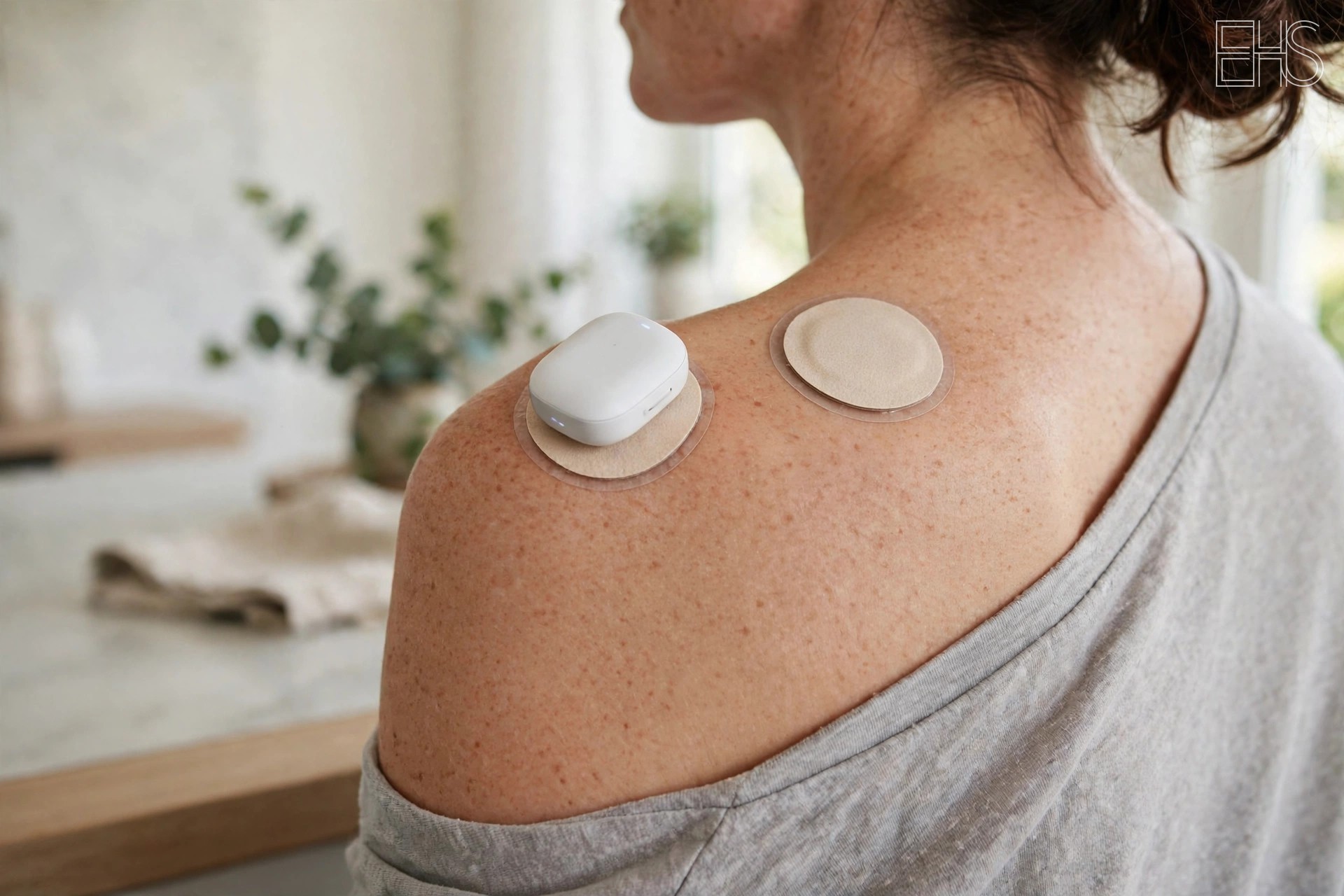
Illustration by EverHealthSpan
Explore Other Wellness Tools
Interested in exploring other wellness subjects and products? Two smaller recovery tools worth a look are NovaaLab's Deep Healing Pad XL (affiliate link), a red-light pad for muscle recovery, and Renu Therapy's Cold Stoic 2.0 (affiliate link), an insulated plunge tub with an integrated chiller.
A Plain-English Safety Note
Electrical stimulation is low risk for most adults, but some people should sit it out. Get professional guidance first if you have a pacemaker or an implanted defibrillator, if you are pregnant, if you have epilepsy or a heart condition, or if you have reduced sensation where you want to treat. Never place pads on the front of the neck, over the eyes, across the chest, or on broken, irritated, or numb skin. Start low and short, never use a unit while driving or operating machinery, and never fall asleep with it on. Redness that fades within an hour is common; a rash, a burn mark, or pain that stays after a session are signs to stop and seek professional guidance. Our cold plunge safety guide applies the same caution to cold exposure.
Frequently Asked Questions
Does TENS actually reduce pain, or is it a placebo?
TENS does more than a sham device in the largest synthesis available, but the effect is modest and short-lived. The 2022 meta-TENS study pooled 381 randomized trials and found pain lower during or just after treatment, at moderate certainty. A 2019 Cochrane overview of 51 trials judged the studies too small and too weak to reach a firm conclusion about longer-term effects.
Can one device do both TENS and EMS?
Yes, and most buyers should choose a combo unit. Wired combos such as the iReliev ET-7070 offer both modes for around $80 to $100, while wireless options such as the PowerDot 2.0 run from around $200 to $350. Use the TENS mode for sore spots and the EMS mode for muscle work.
How long should a session last?
A TENS session usually runs 15 to 40 minutes, and a first session should stay at the short end, around 15 to 20 minutes. An EMS session usually runs around 20 minutes, built from work and rest cycles inside the program. Longer is not better: the tingling fades as nerves adapt, and raising the intensity to chase the feeling is how skin irritation happens.
Can I use TENS every day?
Daily use is common, but it deserves a pause for thought. If the same pain needs TENS every day for weeks, the device is managing a symptom while the cause goes unexamined, and that is worth a conversation with a professional. Tolerance also builds: the intensity that felt strong in week one feels mild in week three, which is normal adaptation.
Is EMS a shortcut to stronger muscles?
No. EMS produces real contractions, and in rehabilitation it helps maintain muscle during inactivity and supports re-education after injury. In healthy athletes, studies find small or inconsistent gains when EMS is added to training. The contraction is real, but it lacks the load, coordination, and range of a voluntary rep.
What other recovery tools pair well with TENS and EMS?
Because a TENS or EMS session treats a single spot, a tool that covers the whole body makes a natural partner. A cold plunge tub does exactly that: Renu Therapy's Cold Stoic 2.0 (affiliate link) is an insulated tub with an integrated chiller, listed at $9,499. Our compression therapy evidence review grades a neighbouring tool the same way, and our home cupping therapy guide covers a hands-on option for the same sore spots.
This article is for informational purposes only and does not provide medical advice or guaranteed outcomes.