The modern recovery wearable does not count steps. It watches your heart overnight, estimates recovery, and delivers a morning verdict: readiness score, sleep grade, suggested training intensity. The category has matured from fitness tracking into something more contested: quantifying the invisible half of training, the part between workouts.
This guide explains what the devices measure, how the scores are built, where the accuracy limits lie, and how to choose without mistaking the map for the territory.
What Recovery Wearables Measure
Strip away the branding and every recovery wearable is built on a small set of physiological signals:
Heart rate variability (HRV): The headline metric: variation in time between heartbeats, reflecting autonomic nervous system balance. Higher HRV generally correlates with a recovered state; suppressed HRV often follows hard training, illness, alcohol, or poor sleep. Measured overnight, when the body is still.
Resting heart rate: Trended over weeks. Stable or declining suggests maintained conditioning; sudden elevation often precedes illness or flags accumulated fatigue.
Sleep staging and duration: Estimated from movement and heart-rate patterns. Consumer staging is approximate, but duration and regularity trends are genuinely useful.
Respiratory rate, skin temperature, and blood oxygen: Nightly skin temperature deviation underlies illness-detection features; respiratory rate trends add context to recovery scores.
Activity and strain: Daytime training load from heart rate or movement. Training advice comes from comparing today's strain against your recent recovery baseline.
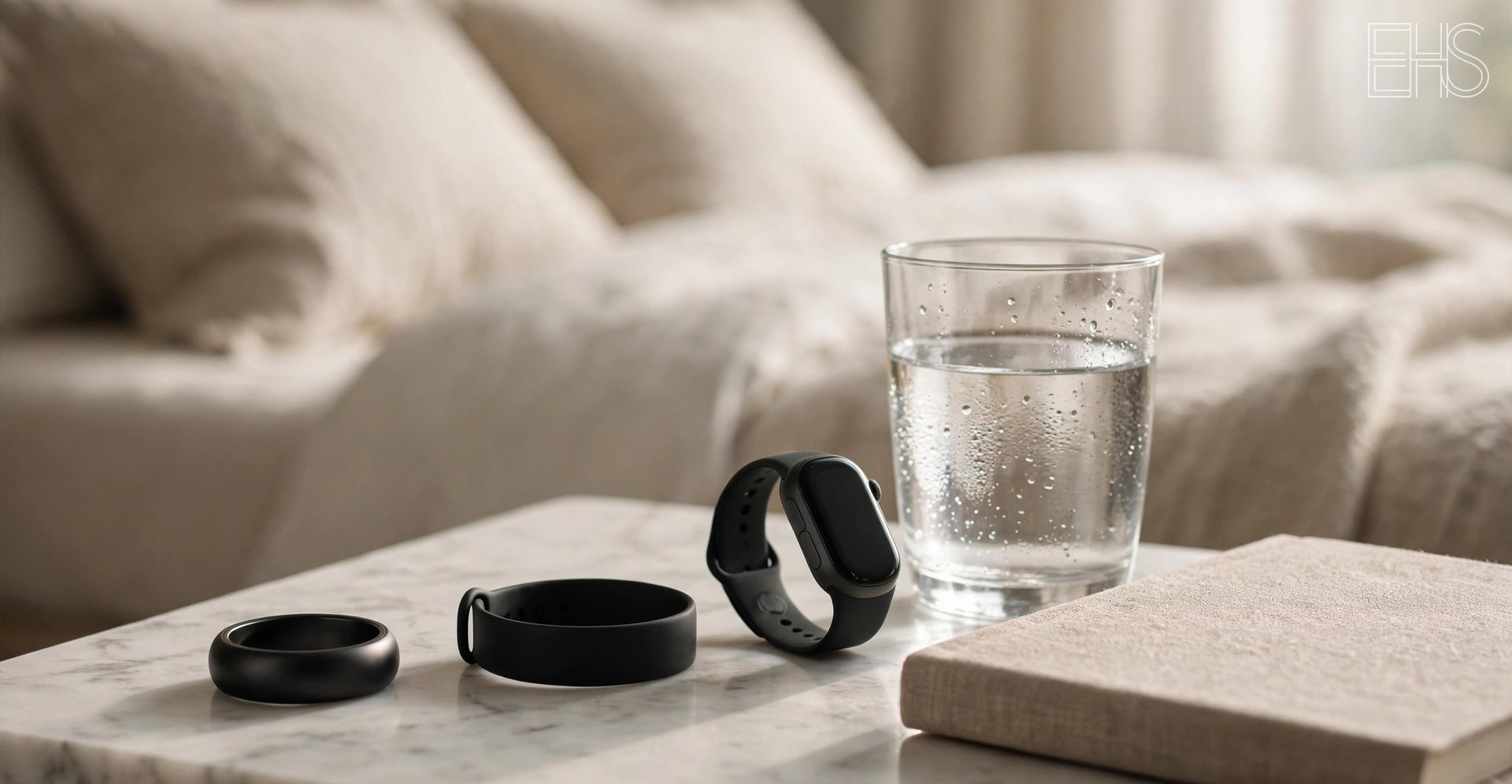
The devices that do this well are rings, wristbands without screens, and smartwatches with recovery features. Form factor matters less than sensor quality and algorithms, though sleep comfort matters enormously: the best sensor is useless if removed at midnight.
The Categories on the Market
Screenless bands ($250 to $400 plus subscription): The recovery-first leaders: no display, no notifications, just sensors and an app. The pitch is focus. The catch is the subscription: hardware is the entry fee, insights live behind a monthly or annual plan. Factor it into the true two-to-three-year cost.
Smart rings ($250 to $550 plus optional subscription): The discreet option, easier to wear around the clock than a wristband, including during sleep where the key measurements happen. Battery lasts several days. Sizing is the complication: fingers swell and shrink, and poor fit loses sensor contact. Most brands ship a sizing kit first; worth the wait.
Smartwatches with recovery features ($300 to $800+, no subscription): The generalists: full smartwatch functionality plus increasingly credible recovery metrics. The advantage is consolidation; the disadvantage is the screen, which some find antithetical to recovery, plus bulk during sleep.
Chest straps and dedicated HRV devices ($50 to $150): The accuracy-first option for daytime HRV. Chest straps remain the gold standard for exercise heart-rate data. They do not track sleep or produce readiness scores alone; they are components, not systems.
Subscriptions change the math: a $300 band with a $30 monthly plan costs over $1,000 across two years; a $500 watch with no subscription costs $500. Compare total cost of ownership, and verify current rates before booking a purchase, since pricing and bundles change frequently.
What to Look For When Shopping
1. Sleep comfort and wearability. The device must be worn all night, every night: this is the first filter, ahead of every spec. If you have never slept with a wearable, trial before committing; abandonment usually happens at 2 a.m., not at the spec sheet.
2. HRV measurement quality. Overnight HRV underlies the readiness score. Favor devices with published validation data or independent testing against reference methods. A nightly average from hours of clean data beats a spot check from poor sensor contact.
3. What the readiness score actually uses. Reputable brands describe their inputs: typically overnight HRV, resting heart rate, sleep quantity and quality, recent training load, sometimes temperature deviation. A black-box score is harder to trust and act on. Prefer transparency.
4. Sleep tracking honesty. No wrist or finger device matches a sleep lab. What wearables do reliably: total sleep time, wake times, consistency trends. Judge on metrics measured well; treat the pretty hypnogram with skepticism.
5. Battery life versus charging friction. A device needing daily charging will miss nights, and missed nights are holes in the scores' data. Multi-day battery is a data-quality feature, not a luxury; week-long batteries win on continuity.
6. App quality and data export. The app is where daily life with the device happens. It should present trends clearly, explain what changed and why, and let your data out: export to Apple Health, Google Health Connect, or CSV. Data portability matters because today's leading app may not be tomorrow's, and your multi-year baseline is valuable.
7. Subscription terms. Understand exactly what stops working without the subscription: some devices become nearly useless, others retain basic tracking. Check whether annual prepayment reduces it.
Realistic Expectations: What the Scores Can and Cannot Do
Scores work best as trend instruments, not daily oracles. Used well, a wearable reveals what you might miss: HRV suppressed four days running, resting heart rate climbing in drinking weeks, deep sleep collapsing with late bedtimes. People who act on these insights often train more sensibly.
Scores work worst as permission slips. Green does not mean your body wants a hard session, only that signals look normal; red means something deviated, not that you are broken. The failure mode is outsourcing judgment: skipping wanted training over an amber ring, or pushing through fatigue over a green watch. The device informs; you decide.
Accuracy limits, plainly: HRV is sensitive to measurement conditions, wrist optical sensors are noisier than chest straps, sleep staging is estimated, and proprietary unregulated algorithms carry no clinical weight. Scores reflect population patterns your physiology may not match. Treat the wearable as a thoughtful partner with imperfect information.
Then the psychological dimension: for some, the data motivates; for others it breeds anxiety, the poor sleeper with a confirming number, the athlete unable to enjoy an easy day over a red score. If tracking starts to feel like being graded, the device works against you. Stay curious, not obedient.
Safety and Who Should Be Careful
Recovery wearables are low-power electrical devices worn against the skin. Plain notes: the metrics are wellness estimates, not diagnoses, and no score overrides symptoms. Chest pain, fainting, palpitations, or unexplained breathlessness deserve professional evaluation, not a glance at your ring.
Skin irritation from prolonged wear is the most common complaint; rotate position, clean regularly, rest the skin if needed. Check materials if sensitive to nickel or silicone. And if nightly scores affect your sleep or mood, wear the device less, check the app less, or stop. The tool serves you, not the reverse.
Cost Tiers and the Value Question
| Category | Typical hardware price | Subscription | Two-year true cost |
|---|---|---|---|
| Screenless bands | $250 to $400 | ~$20 to $30/month | $730 to $1,120 |
| Smart rings | $250 to $550 | $0 to ~$10/month | $250 to $790 |
| Smartwatches | $300 to $800+ | Usually none | $300 to $800+ |
| Chest straps | $50 to $150 | None | $50 to $150 |
The value question is commitment. Hardware is the cheap part; the expensive part is nightly wear for months plus actually reading trends. Consistent wearers value their devices highly regardless of brand; three-week wearers bought an expensive paperweight with a subscription.
Choose the form factor most likely to be worn consistently, favor transparent score inputs and data export, and compute the true two-year cost. The best wearable is not the one with the most sensors; it is the one still on your finger in eighteen months.
Our cold plunge vs sauna guide compares two classic recovery modalities for heavy training days, and our contrast therapy protocols describe heat and cold routines whose effects show up in morning HRV trends.
Living With Them: The Practical Side
The routine is light but daily: wear it, charge in a consistent window, glance at the morning summary, review trends weekly. The weekly review is where value lives: multi-week patterns reveal what daily scores obscure.
Two practices separate satisfied owners. First, correlate deliberately: when data surprises you, note what differed. The wearable becomes far more useful once you learn your patterns. Second, protect the baseline: consistent wear yields comparable data; sporadic wear yields noise.
After a year or two, many owners have internalized the lessons and need the device less. That is the product working, not failing. Some downshift to simpler tracking; others keep the long baseline. Both are rational.
Frequently Asked Questions
What is HRV and why does it matter?
Heart rate variability is the variation in time between consecutive heartbeats, reflecting autonomic nervous system activity. Higher HRV broadly suggests a recovered state; suppressed HRV often follows hard training, illness, alcohol, or poor sleep. It is one of the few objective windows into recovery status, now measurable overnight without a lab.
Are readiness scores accurate?
Useful trend instruments, not precise ones. Good devices measure the underlying signals reasonably well; the composite score is a proprietary interpretation. Treat scores as informed suggestions, cross-check against how you feel, and never let a score override symptoms.
Do I need a subscription-based wearable?
Not necessarily. Subscription devices tend to lead on recovery features and app polish, but a $30 monthly plan adds $720 over two years. Smartwatches without subscriptions now offer credible recovery metrics. Compare two-year true cost and check what stops working on cancellation.
Ring, band, or watch: which form factor is best?
The one worn every night. Rings win on discretion and sleep comfort; screenless bands on focus; watches on consolidation. Sensor differences between leading options are smaller than the difference between consistent wear and none. Sleep comfort decides.
Can a wearable tell if I am getting sick?
Sometimes: nightly temperature deviation and elevated resting heart rate often shift a day or two before obvious symptoms, and several devices flag this explicitly. It is an early warning, not a diagnosis. Users who rest when flagged often report milder courses, though that remains anecdotal.
Will tracking my sleep make my sleep worse?
For some, yes: anxiety about sleep scores that itself degrades sleep. If you dread the morning number or sleep worse since tracking began, the device works against you. Check scores less often, focus on weekly trends, or stop wearing it at night. The tool serves your rest, not the reverse.
This is general information about consumer devices, not medical advice. Talk to a qualified professional before acting on any health data you collect.