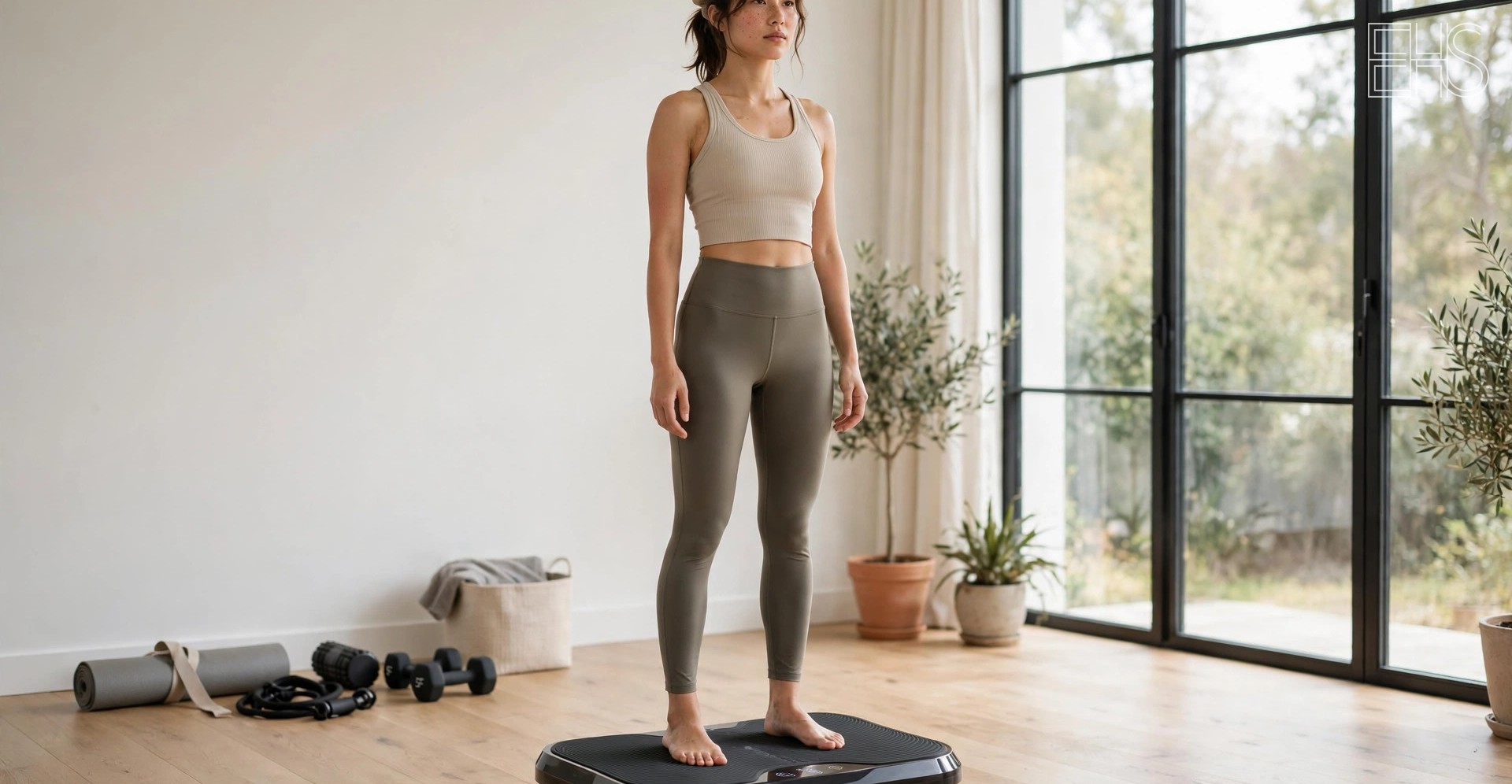
The vibration plate is the home fitness device most likely to gather dust, and also one of the most interesting when used with intent. Stand on a platform that oscillates dozens of times per second, and your muscles contract reflexively to stabilize you. Ten minutes can feel like a genuine workout, or like a strange interlude, depending on the machine, the settings, and what you do while standing on it.
Prices run from around $200 for basic oscillating platforms to $4,000 and beyond for premium linear machines. This guide explains the two technologies, what the specifications mean, where the evidence actually stands, and how to buy without paying for mystique.
What a Vibration Plate Does
A vibration plate is a platform that moves rapidly beneath your feet while you stand, squat, or exercise on it. The movement forces rapid small muscle contractions as your body stabilizes, which is why standing still can elevate heart rate and leave legs feeling worked.
There are two fundamentally different technologies, and confusing them is the most common buying mistake:
Oscillating (pivotal) plates: The platform pivots around a central axis like a seesaw. Amplitude is higher at the edges and near zero in the center, so foot position changes intensity. This is the older, more common technology in the budget and mid-range tiers.
Linear (vertical or tri-planar) plates: The entire platform moves up and down uniformly (vertical), or in multiple planes (tri-planar). Intensity is consistent wherever you stand. This is the technology used in premium machines and most of the published research.
The distinction matters because research literature and budget product pages often describe different machines. When a study reports an effect from whole-body vibration, check which type was used; premium brands cite linear-plate research that may not apply to a $250 oscillating platform.
The Categories on the Market
Budget oscillating platforms ($200 to $500): Compact, lightweight, seesaw motion, basic speed settings. Fine for gentle use and testing the sensation. Limitations are real: lower build quality, less stability at higher speeds, vague specs. The experience is milder than the marketing implies.
Mid-range platforms ($500 to $1,500): Better-built oscillating plates and entry-level linear machines. Sturdier construction, wider speed ranges, more honest specifications, and often larger platforms that accommodate exercise positions beyond standing. This is where the category starts to feel like real equipment.
Premium linear machines ($1,500 to $4,000+): The established professional brands. True vertical or tri-planar motion, precise frequency control, high build quality, large stable platforms, and long warranties. These are the machines used in professional training and rehabilitation settings. The experience is noticeably different: smoother, more powerful, more controllable.
Prices in the premium tier vary with configurations and accessories, so verify current rates before booking a purchase or comparing across brands.
What to Look For When Shopping
1. Platform type: oscillating or linear. Decide this first. For gentle activation, balance work, and light use, an oscillating plate is adequate and much cheaper. For the stronger stimulus in the research literature or serious training use, linear is the honest choice. Do not pay linear prices for an oscillating machine, and check budget listings: some describe 3D motion loosely.
2. Frequency range, in Hz. Frequency is the key training variable, typically 20 to 50 Hz on decent machines. Lower frequencies (20 to 30 Hz) suit balance and gentle activation; higher frequencies (35 to 50 Hz) suit strength-oriented use. Published, adjustable frequency is the mark of a serious spec sheet.
3. Amplitude. How far the platform moves, usually 1 to 4mm for linear machines and higher at the edges of oscillating plates. Higher amplitude means a stronger stimulus. Adjustable amplitude is valuable; fixed amplitude becomes a limitation as tolerance builds.
4. G-force or acceleration. Some manufacturers publish the gravitational force the platform generates. It is a useful comparative number when published honestly, and its absence is a mild red flag. Be cautious of dramatic G-force claims on budget machines; the physics of a lightweight platform limit what is plausible.
5. Platform size and stability. Proper use means more than standing still: squats, lunges, push-ups with hands on the platform, calf raises. A larger platform accommodates exercise; a small one confines you to standing. Stability matters enormously at higher settings, and heavier generally means more stable here.
6. Noise and vibration transfer. The plate vibrates, and so does everything it touches. On a ground floor with a rubber mat, most machines are neighbor-friendly. In an upper-floor apartment, vibration transfer is a genuine concern at any tier; budget machines run louder and harsher. If you live above someone, think carefully before buying.
7. Programs and controls. Preset programs are convenient for beginners; manual frequency and time control are what get used long-term. A clear display readable from standing height matters more than app connectivity.
8. Warranty and weight capacity. Check the stated maximum user weight and take it seriously; machines run near their limit wear faster and feel less stable. One to two years of warranty is standard; premium brands offer more. Motors and electronics are the failure points.
The Evidence, Honestly Stated
Whole-body vibration has a real research literature, which is more than can be said for some recovery categories. It is also a literature full of qualifiers. Reasonably supported findings include: short-term improvements in balance and stability measures, particularly in older adults; modest effects on muscle activation during use; and some evidence for small improvements in bone density measures with long-term use in specific populations.
The qualifiers matter. Effect sizes are small to moderate, many studies use professional linear machines (so results transfer poorly to budget platforms), and protocols vary wildly. The gap between studied populations, often older adults in supervised programs, and ten unsupervised home minutes is real.
What the evidence does not support: dramatic claims around fat loss, cellulite, or ten minutes equaling an hour in the gym. Vibration training is a genuine adjunct with modest effects, not a replacement for conventional exercise.
Safety and Who Should Be Careful
Vibration plates are electrical, mechanical devices that shake your entire body, and they are not for everyone. Skip them or seek qualified guidance first if you are pregnant; have a joint replacement, particularly in the hip or knee; have a history of blood clots or a clotting condition; have significant cardiovascular disease; have acute back problems, herniated discs, or recent fractures; or have an implanted electronic device.
For everyone else, start gently: low frequency, sessions of five minutes or so, building up gradually. Dizziness, nausea, or headache means the setting is too aggressive. Keep knees slightly bent rather than locked, and treat the machine as a training tool: the literature's benefits come from active use in exercise positions, not passive standing while scrolling.
Cost Tiers and the Value Question
| Tier level | Typical price band | Included features |
|---|---|---|
| Budget oscillating platforms | $200 to $500 | Gentle use, basic specs, lighter build |
| Mid-range platforms | $500 to $1,500 | Better construction, wider ranges, some linear |
| Premium linear machines | $1,500 to $4,000+ | True linear motion, precise control, pro build |
The value question hinges on intended use. For gentle activation and balance practice, a budget oscillating plate is defensible. For serious training, premium linear machines are genuinely different equipment, and buying budget while expecting the premium experience is this category's classic disappointment.
The abandonment risk here is the highest in home fitness. Plates are awkward to store, and setup friction loses to the couch. Before buying, decide where it lives and whether ten active minutes in exercise positions, several times a week, is sustainable for months. If the honest answer is standing on it while watching television, save your money.
Vibration training pairs well with conventional recovery routines. Our contrast therapy protocols cover heat and cold work that complements any training stimulus, and our red light therapy guide looks at another passive modality often stacked with training days.
Living With Them: The Practical Side
A plate needs a permanent or semi-permanent spot: roughly a square meter of floor, ideally on the ground floor or over a vibration-damping mat. Sessions run 10 to 15 minutes including warm-up and cool-down positions. There are no consumables. Maintenance is minimal: wipe the platform, check cables, keep the manual somewhere you can find it.
The ownership pattern that works: integrate the plate into an existing routine. Ten minutes of squats, lunges, and calf raises as a strength-work finisher, or a balance-focused morning session, is how machines earn their floor space. Used as a novelty, they become expensive coat racks within months.
Frequently Asked Questions
Do vibration plates actually work?
For narrow purposes, modestly. The research supports small to moderate effects on balance, muscle activation during use, and possibly bone density with long-term use in specific populations. What is not supported: meaningful fat loss, cellulite reduction, or equivalence to conventional exercise. It is a genuine adjunct stimulus with modest effects, not a fitness shortcut.
Oscillating or linear: which should I buy?
For gentle use, balance work, and light activation, oscillating plates are adequate and far cheaper. For serious training use or the stronger stimulus described in research, linear machines are the honest choice. The most common regret in this category is buying a budget oscillating plate while expecting the premium linear experience described in marketing that cites linear-plate research.
How often should I use a vibration plate?
The studied protocols typically involve sessions of 10 to 15 minutes, two to four times per week, with exercises performed on the platform rather than passive standing. Daily use is practiced by some owners, but more is not necessarily better; muscles and joints need recovery from any training stimulus. Start with two or three sessions per week and short durations.
Can I lose weight with a vibration plate?
Not meaningfully from the plate alone. Vibration burns modest energy and does not create the sustained demand that drives fat loss. The plate can supplement a program built on nutrition and conventional exercise, but cannot substitute for either.
Are vibration plates safe for older adults?
Much of the positive research was conducted in older populations, particularly around balance, which makes the category genuinely interesting for that audience. The cautions are correspondingly important: joint replacements, cardiovascular conditions, and balance limitations all warrant qualified guidance before starting. When cleared, supervised or cautious initial sessions at low settings are the sensible path.
Will it bother my neighbors?
Possibly, and this deserves honest consideration before buying. The plate itself makes noise, and vibration transfers through floors, particularly in wood-frame buildings. Ground-floor use over a thick rubber mat is the neighbor-friendly configuration. Upper-floor apartment use is the riskiest scenario in this category; some buildings effectively prohibit it through noise rules. When in doubt, ask before the delivery truck arrives.
This content is informational, not medical guidance. If you have a medical condition, ask a qualified professional before starting any new routine.